
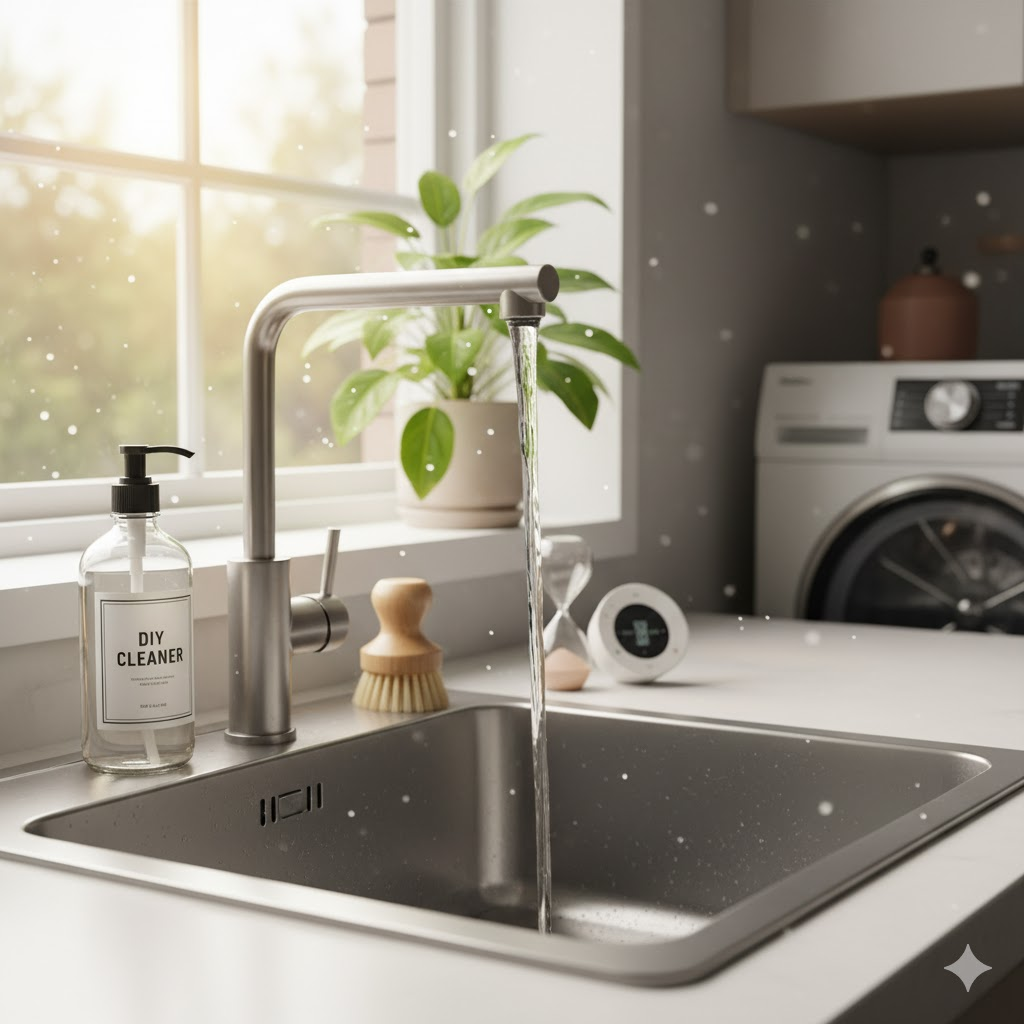
The “Silent Leak” That Drained My Savings
Last summer, I opened my utility bill and nearly choked on my coffee. It was $180 higher than usual. There were no visible puddles in my house, no dripping faucets, and we hadn’t changed our showering habits. I felt like I was literally flushing money down the toilet—and as it turns out, I was.
A tiny, silent leak in a guest bathroom flapper was wasting nearly 200 gallons of water a day. That experience transformed me from a passive consumer into a Smart Water Manager. I realized that most of us treat water as an infinite, cheap resource until the bill tells us otherwise.
In this comprehensive guide, I will share the exact systems I implemented to cut my household water consumption by 50%. These aren’t just “eco-tips”; they are financial strategies that treat water as a managed asset.
Part 1: The Anatomy of Water Waste
To manage what you use, you must first understand where it goes. I used to think the garden was the culprit, but after tracking my usage for a month, I discovered the “Big Three” internal thieves:
The Toilet (The Heavy Lifter): My old toilet was using 5 gallons every time someone flushed. In a family of four, that’s nearly 100 gallons a day just to move waste.
The Shower (The Time Sink): My standard showerhead was a “water cannon,” spraying 2.5 gallons per minute. I realized my 10-minute morning ritual was costing me 25 gallons of expensive, heated water before my day even started.
The Faucets (The Invisible Drip): I calculated that just leaving the tap running while I brushed my teeth was wasting enough water to fill a small aquarium every week.
Part 2: The “Low-Hanging Fruit” (Instant Fixes)
You don’t need a degree in plumbing to start saving today. These three steps took me less than an hour and cost me less than a pizza delivery.
Step 1: My “Food Coloring” Detective Work
This is the single most effective “detective” work you can do. I dropped 5 drops of blue food coloring into my toilet tank (not the bowl) and walked away. Twenty minutes later, the bowl water was light blue.
The Lesson: My flapper was leaking silently. I spent $5 on a new one, and my next bill immediately dropped by $40. It was the best $5 I ever spent.
Step 2: The Aerator Transformation
I replaced the old aerators on my sinks with “High-Efficiency” versions.
The Reality: I was worried the water pressure would feel weak, but these mix air into the stream. It actually felt stronger while using 30% less water. It’s a strange psychological win—you feel like you’re getting more, but you’re paying for less.
Step 3: The “Navy Shower” Compromise
I love hot showers, so I refused to take 2-minute cold ones. Instead, I installed a Shower Start Valve.
My Experience: This little bolt stops the water flow once it gets hot. Now, I can turn on the shower, go pick out my clothes, and the water won’t just run down the drain while it’s waiting for me. It stays hot and ready, saving me at least 5 gallons per shower.
Part 3: The “Kitchen Myth” and Advanced Systems
Once I fixed the leaks, I moved on to systemic changes. This is where the real “wealth” was built.
Why I Stopped Hand Washing Dishes
I used to think my dishwasher was a luxury that wasted water. I was wrong. I timed myself washing a full load by hand and used a bucket to measure—I used nearly 30 gallons.
The Shift: My ENERGY STAR dishwasher uses only 3 gallons. Now, I have a strict “No Hand Washing” rule for anything that fits in the machine. It saves me 25 gallons and 30 minutes of my life every single day.
Gardening Without the Guilt
My garden used to look like a swamp after I watered it. I realized I was watering the sidewalk more than the roots.
My “Soak” Strategy: I switched to watering for 5 minutes, pausing for an hour, and then another 5. This allows the dry soil to actually absorb the water rather than letting it run off into the street.
The Mulch Shield: I invested $30 in organic mulch. It kept the soil so moist that I was able to cut my watering schedule from every day to once every three days.
Part 4: The Final Tally: What This Means for My Wallet
I didn’t just save water; I gave myself a significant annual raise. By cutting out the silent leaks, optimizing my kitchen habits, and managing my garden properly, I’ve managed to keep my utility bill consistently 45-50% lower than my neighbors.
Instead of writing a check for $150 every month, I’m now paying around $75. That’s $900 a year that stays in my savings account rather than disappearing down the sewer. That’s enough for a family vacation or a significant upgrade to my home office.
Part 5: FAQ – My Personal Take on Water Myths
Q: “Is it worth the effort for such small changes?”
A: Absolutely. It’s the “Compound Interest” of home management. Small fixes today prevent thousands of dollars in water damage and utility costs over the next decade.
Q: “Is tap water actually okay to drink?”
A: I stopped buying bottled water three years ago. It takes 3 liters of water just to make the plastic for a 1-liter bottle. I bought a high-quality under-sink filter for $80, and the water tastes better than the expensive brands.
Conclusion: Every Drop is a Deposit
Smart water management is the ultimate “win-win.” I’ve reduced my environmental footprint, but more importantly, I’ve taken control of my household’s financial efficiency. It started with a $180 mistake, but it ended with a more disciplined, high-performance home.
Start today with the food coloring test. It’s simple, it’s fast, and it might just be the most profitable two minutes of your month.
What’s the highest water bill you’ve ever received? Share your story in the comments, and let’s troubleshoot the cause together!
References & Sources:
Personal residential water audit records (2024-2025).
EPA WaterSense Program – Guidelines for High-Efficiency Fixtures.
ENERGY STAR – Comparative Study on Machine vs. Hand Dishwashing.