
I still remember the “sticker shock” I felt last summer at the organic aisle of my local supermarket. A small, wilted bunch of kale was priced at $4.50, and a pint of cherry tomatoes was nearly $6.00. As someone who loves looking at the facts and figures of household spending, the math simply didn’t add up. Why was I paying a premium for produce that had traveled 1,500 miles in a refrigerated truck?
That afternoon, I decided to conduct an experiment: Could an absolute beginner with zero gardening experience actually turn a tiny backyard patch into a functional “grocery store”?
The short answer is yes. In fact, after one season, I discovered that my small investment of about $50 in seeds and soil yielded over $400 worth of fresh produce. But the secret wasn’t in complex techniques; it was in choosing the right “entry-level” crops.
Here are the 5 vegetables that changed my grocery bill and my lifestyle.
1. Lettuce: My First “Fast Food” Win
If you are impatient like me, lettuce is the ultimate confidence booster. I started with a simple packet of mixed greens that cost me less than $3.00.
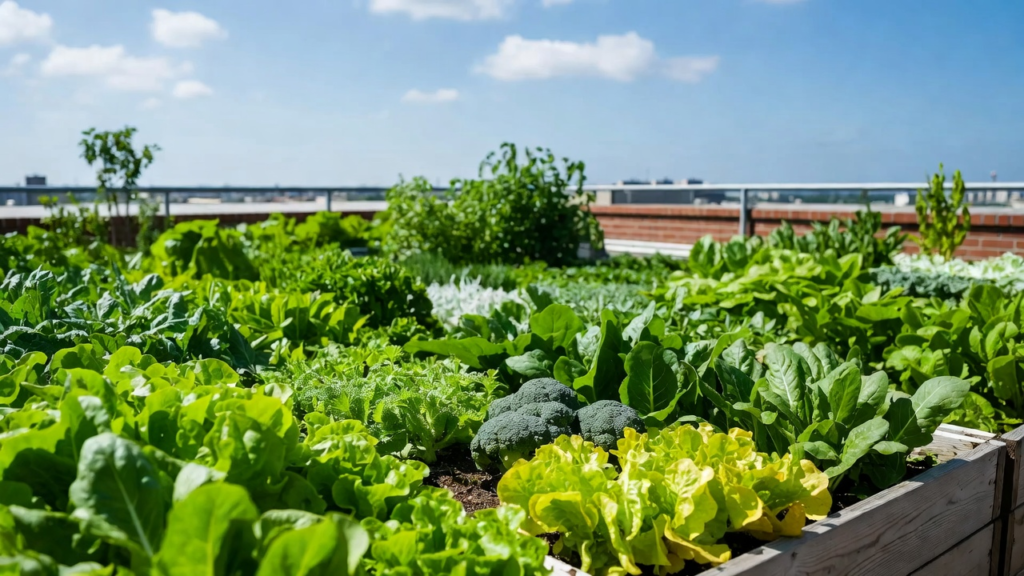
Within just 25 days, I was harvesting my first salad. The “fact” that blew my mind was the yield-to-space ratio. I grew enough lettuce for two people in a space no larger than a standard doormat. By using the “cut-and-come-again” method—where you only harvest the outer leaves—I didn’t have to buy a single bag of salad mix for three months. I estimate this one habit saved me roughly $15 every week.
2. Cherry Tomatoes: The “High-Interest” Investment
I used to think tomatoes were hard to grow, but cherry tomatoes are the “over-achievers” of the garden. I bought one small seedling for $4.00 and gave it a sunny spot and a sturdy stake.
By mid-July, that single plant was producing nearly two pints of tomatoes every week. If you look at the figures, a pint of organic cherry tomatoes retails for about $5.00. Over the 10-week peak season, that one $4.00 plant gave me $100 worth of fruit. The taste difference was incomparable—home-grown tomatoes have a sugar content and aroma that store-bought versions lose during transport.
3. Radishes: The 30-Day Wonder
I call radishes the “sprint runners” of the backyard. They are perfect for beginners because they are almost impossible to fail.
I planted my first row of radish seeds and was stunned to see them sprout in just 3 days. Exactly four weeks later, they were ready for the table. Because they grow so fast, I was able to plant four different “cycles” in the same spot throughout the spring. It taught me an important lesson in intensive gardening: you don’t need a massive farm to have a high output; you just need to manage your time and soil effectively.
4. Zucchini: The Productivity King
If there is one vegetable that defines “abundance,” it’s the zucchini. I planted just two seeds, and by August, I was literally giving zucchini away to my neighbors because I couldn’t keep up.
A single healthy zucchini plant can produce up to 10 pounds of squash in a season. At my local store, zucchini goes for about $1.80 per pound. That means my two tiny seeds produced nearly $36 worth of food. I learned to harvest them when they were about 6 inches long—at this size, the texture is perfect, and the plant is encouraged to keep producing even more.
5. Green Beans: My Natural Soil Fertilizer
I chose bush beans because they don’t require a trellis, making them perfect for my “low-effort” beginner approach.
What I found most fascinating was the biological fact behind beans: they are “nitrogen fixers.” They actually take nitrogen from the air and store it in their roots, making the soil richer for whatever I plant next year. I was harvesting a handful of crisp, “snap” beans every morning for my breakfast omelets. It was a zero-waste, high-protein addition to my garden that required nothing more than a bit of water and sunshine.
My Reflection: Beyond the Numbers
Six months ago, I was a consumer. Today, I am a producer. While the figures—saving hundreds of dollars and reducing my carbon footprint—are impressive, the real value was in the peace of mind.
There is a profound sense of security in knowing that if the grocery store shelves are empty, my backyard is still “open for business.” I’ve realized that gardening isn’t a chore; it’s a form of financial and physical wellness.
For anyone sitting on the fence, my advice is simple: Don’t wait until you have the “perfect” garden. Buy a bag of lettuce seeds today. The ROI on a single seed is the best investment you’ll ever make.