
In 2026, the most valuable asset in your kitchen isn’t your high-end air fryer or your smart fridge—it’s what you’re currently throwing in the trash. As global inflation continues to pinch household budgets, savvy homeowners are pivoting toward “Zero-Waste Cooking.” At FactsFigure, we’ve crunched the numbers to show you how your citrus peels and vegetable scraps can save you over $150 a year while protecting your family from harsh chemicals.
1. The Economics of the Scrap: Why 2026 is the Year of Zero-Waste
For decades, we’ve been conditioned to see food scraps as “trash.” However, the economic landscape of 2026 has made “waste” a luxury we can no longer afford. With the cost of commercial cleaning supplies rising by 12% in the last year alone, the kitchen has become the front line for financial optimization.
“Zero-Waste Cooking” is no longer just an environmental statement; it’s a sophisticated financial strategy. By repurposing what we once discarded, we are essentially “biohacking” our household expenses.
2. The Citrus Goldmine: From Peel to Powerful Cleaner
One of the most effective ways to turn waste into a high-value asset is through Natural Enzyme Cleaners.
The Chemistry of Citrus
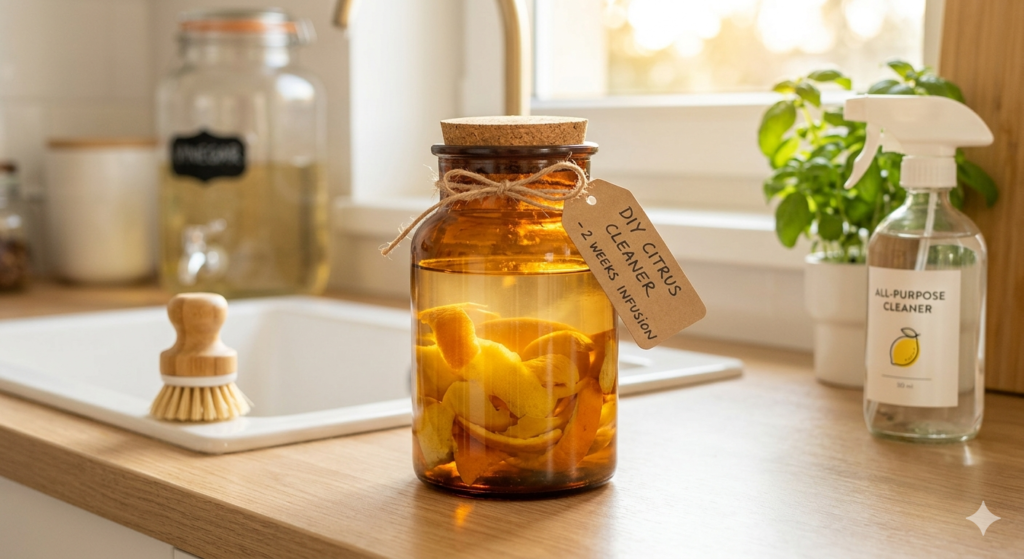
Citrus peels (orange, lemon, grapefruit) contain Limonene, a natural solvent that cuts through grease and grime better than many synthetic alternatives. When combined with white vinegar, it creates a powerhouse solution that is non-toxic and incredibly cheap.
The “Expert Infusion” Method:
Collect & Store: Save your citrus peels in a jar in the fridge until it’s full.
The Vinegar Soak: Submerge the peels in white vinegar.
The Wait: Let it sit in a dark cupboard for 2 weeks. The vinegar extracts the oils, turning the liquid into a potent, pleasant-smelling concentrate.
The Dilution: Mix 1:1 with water in a spray bottle.
The Figure: By replacing all-purpose cleaners, glass cleaners, and floor sanitizers with this DIY solution, the average family saves approximately $150 USD per year.
3. Beyond Cleaning: Other “Trash” Assets in 2026
The citrus-vinegar hack is just the tip of the iceberg. Here is how we are seeing data-driven households optimize other scraps this year:
Coffee Grounds as “Black Gold”: Used grounds are being repurposed as high-nitrogen fertilizer or natural exfoliants. In 2026, premium organic fertilizers are at an all-time high; your morning espresso is effectively a free garden supplement.
Vegetable Scraps as “Liquid Assets”: Onion skins, carrot tops, and celery ends are stored in the freezer. Once a week, they are boiled to create a nutrient-dense vegetable stock. This eliminates the need for store-bought bouillons that are often loaded with sodium and preservatives.
Fruit Peels for Natural Deodorizers: Beyond cleaning, boiling apple peels with cinnamon acts as a natural “home fragrance” system, replacing expensive and potentially harmful chemical diffusers.
4. The Health Dividend: Avoiding the “Chemical Tax”
When we talk about “assets,” we must include health. Commercial cleaners often contain VOCs (Volatile Organic Compounds) that can impact indoor air quality.
Data from 2025 health surveys indicates that households using natural, food-based cleaners reported a 20% decrease in minor respiratory irritations. By using what you already have in your kitchen, you are essentially investing in your long-term wellness—a “figure” that is hard to quantify but impossible to ignore.
5. Integrating the “2-Minute Rule” into Waste Management
A common barrier to zero-waste living is the perceived “effort.” To make this sustainable, we recommend the 2-Minute Rule:
If it takes less than 2 minutes to process a scrap (e.g., tossing peels into a jar or scraps into a freezer bag), do it immediately.
This prevents “decision fatigue” and ensures that your kitchen naturally cycles waste into wealth without feeling like a chore.
6. The Verdict: Is Zero-Waste Worth the Effort?
At FactsFigure, we look at the intersection of lifestyle and logic. The data is clear: Zero-waste isn’t just about saving the planet; it’s about reclaiming the value that big-box retailers have convinced us to throw away.
2026 is the year we stop paying for what we already own. By turning your citrus peels into cleaner and your scraps into stock, you aren’t just a cook .