
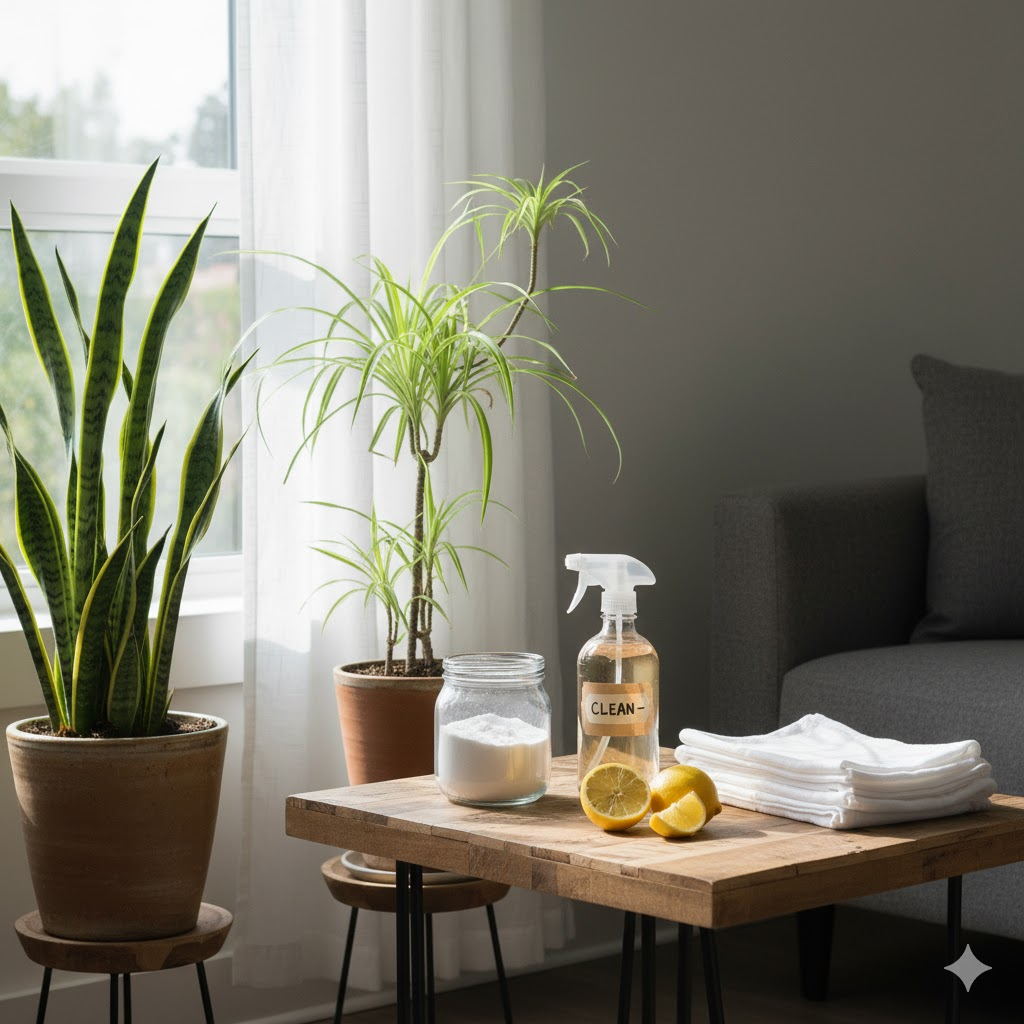
For years, I believed that a clean home had to smell like “Mountain Spring” or “Lemon Zest” from a spray bottle. I was proud of my shiny floors and bleach-white bathroom. But then, I noticed a pattern: every time I did a deep clean on Sundays, my three-year-old son would develop a dry, hacking cough, and I would wake up with a dull, persistent headache on Mondays.
It took a long conversation with a respiratory specialist to realize the irony: In my obsession with “sanitizing” my environment, I was actually polluting my own indoor air with VOCs (Volatile Organic Compounds). According to the Environmental Protection Agency (EPA), indoor air can be 2 to 5 times more polluted than outdoor air. That was my breaking point. I decided to perform a total Natural Home Detox.
This wasn’t just about switching soaps; it was about re-evaluating the “chemistry” of my entire life. Here is the comprehensive, step-by-step guide on how I swapped toxic chemicals for nature’s biology, saved thousands of dollars, and finally breathed easy.
Part 1: The Chemistry of the “Under-Sink Grave”
The space under my kitchen sink was a graveyard of colorful, toxic plastic bottles. I realized I had a different chemical for every single surface: windows, floors, granite, ovens, and toilets.
The Hidden Dangers of Traditional Cleaners
Most commercial cleaners contain Phthalates (for fragrance), Perchloroethylene (in carpet cleaners), and Ammonia (in window sprays). These chemicals don’t just stay on the surface; they linger in the air long after the “clean” smell is gone.
My Personal Pivot: The “Golden Trio”
I made the radical decision to throw away (responsibly) 90% of those bottles. I replaced them with three ingredients that cost less than a cup of coffee: White Vinegar, Baking Soda, and Pure Lemon Juice.
The All-Purpose Miracle Spray: I mix 1 part water, 1 part white vinegar, and 15 drops of tea tree oil in a glass spray bottle.
My Real-World Experience: Does it smell like a salad for 10 minutes? Yes. But once it dries, the smell vanishes, along with 99.9% of surface bacteria.
The Oven Degreaser: I used to fear cleaning the oven because of the fumes. Now, I make a paste of baking soda and water, let it sit overnight, and wipe it away with a vinegar-soaked rag. It’s safer, cheaper, and I don’t need a gas mask to do it.
Part 2: Banishing the “Invisible Mist” (The Air Quality Crisis)
I used to have those automatic plug-in air fresheners in every room. I thought they were keeping my house “fresh.” In reality, they were just masking odors with synthetic molecules that can disrupt hormones and irritate the lungs.
The “Daylight Air Flush” Technique
The single most effective tool for a home detox is absolutely free: Moving air.
My 10-Minute Habit: Every single morning, regardless of the weather (even in the biting cold of January), I open every window in my house for exactly 10 minutes.
The Science: This “air flush” removes the stale carbon dioxide, radon, and formaldehyde that accumulate overnight from furniture and flooring. Within minutes, the indoor air quality is refreshed without a single cent spent.
Essential Oils: Nature’s Fragrance
If you miss the scents, I highly recommend an essential oil diffuser. But be careful—only use 100% pure therapeutic grade oils.
My Favorite Blend: Eucalyptus and Peppermint during the flu season, and Lavender for the bedrooms to lower cortisol levels before sleep.