
A serene, warm, and minimal bedside setup with herbal tea and a journal, perfect for healthy sleep hygiene.
Disclaimer: I am an indoor plant enthusiast sharing my personal trial-and-error experience. These tips are for general care; specific plant species may require different conditions. Always research your specific plant’s needs.
Three years ago, my apartment was a “graveyard” for green things. I loved the look of indoor plants in interior design magazines, but every time I brought a Fiddle Leaf Fig or a Succulent home, it would yellow, wither, and die within a month. I felt like I just didn’t have a “green thumb.”
However, I realized that I wasn’t failing the plants; I just didn’t understand their “language.” After a lot of research and many lost leaves, I’ve successfully turned my living room into a lush, green sanctuary. Here are the 5 practical habits that changed everything for me.
1. The “Finger Test” (Stop Overwatering!)
My biggest mistake was watering my plants on a strict schedule (like every Monday). I thought I was being organized, but I was actually “drowning” them.
My Realization: I learned that soil moisture changes based on the season and humidity.
My New Routine: Now, I never water without doing the “Finger Test.” I stick my index finger two inches into the soil. If it feels dry, I water it. If it’s still damp, I wait. This simple habit saved my Snake Plants and Monsteras from root rot.
2. Finding the “Sweet Spot” for Light
I used to place plants in dark corners because they looked good there, ignoring the fact that plants “eat” light to survive.
My Experience: I spent a weekend observing how sunlight moved through my apartment. I noticed that my “bright indirect light” spot was actually only bright for two hours a day.
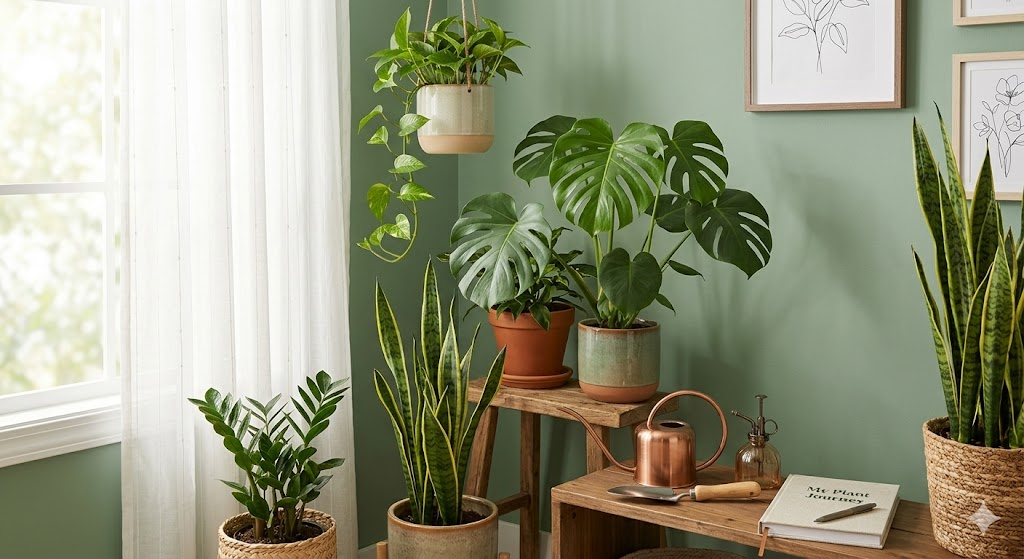
My Adjustment: I moved my plants closer to the windows but used a sheer curtain to protect them from harsh, direct afternoon sun. The change was almost immediate—my Pothos started growing new vines within a week!
3. Humidity: The Secret Weapon
During winter, my plants’ leaves started turning brown and crispy at the edges. I realized my indoor heating was stripping the air of moisture.
My DIY Solution: Instead of buying an expensive humidifier right away, I grouped my plants together. Plants naturally release moisture, and huddling them creates a small “microclimate.”
My Result: For my thirstier plants like Calatheas, I placed their pots on a tray filled with pebbles and a bit of water. The brown edges stopped spreading, and the leaves looked much shinier.
4. Why I Stopped Using “Mystery Soil”
I used to buy the cheapest bag of dirt from the supermarket. I didn’t realize that different plants need different “breathing room” in their soil.
My Secret Mix: I started mixing my own soil using potting mix, perlite, and pine bark.
My Observation: This mix allows water to drain quickly, preventing that soggy “muddy” feeling at the bottom of the pot. Since switching, my plants have developed much stronger, whiter roots.
5. Learning the Art of “Patience and Observation”
The most important lesson I learned is that plants don’t grow overnight. I used to panic and add more fertilizer every time a leaf fell off.
My Philosophy Change: Now, I treat my morning coffee time as a “plant check-in.” I look for tiny bugs under the leaves or new growth points.
My Tip: If a plant looks sad, don’t move it, water it, and fertilize it all at once. Change one thing at a time and wait a week to see how it reacts.
Why I Love My Indoor Garden
Beyond the aesthetics, taking care of my plants has taught me mindfulness. It’s a slow, rewarding hobby that has significantly reduced my daily stress. My home feels more alive, and my air feels fresher.
If you think you have a “black thumb,” don’t give up. Start with a hardy Snake Plant or a ZZ Plant, use the finger test, and watch how much joy a little bit of green can bring to your life.
Do you have a plant that just won’t stay happy? Tell me about it in the comments, and let’s troubleshoot together!
References:
Personal gardening logs (2023-2026).
General indoor horticulture guidelines from Royal Horticultural Society (RHS).
Insights on indoor air quality and plants from NASA’s Clean Air Study.