
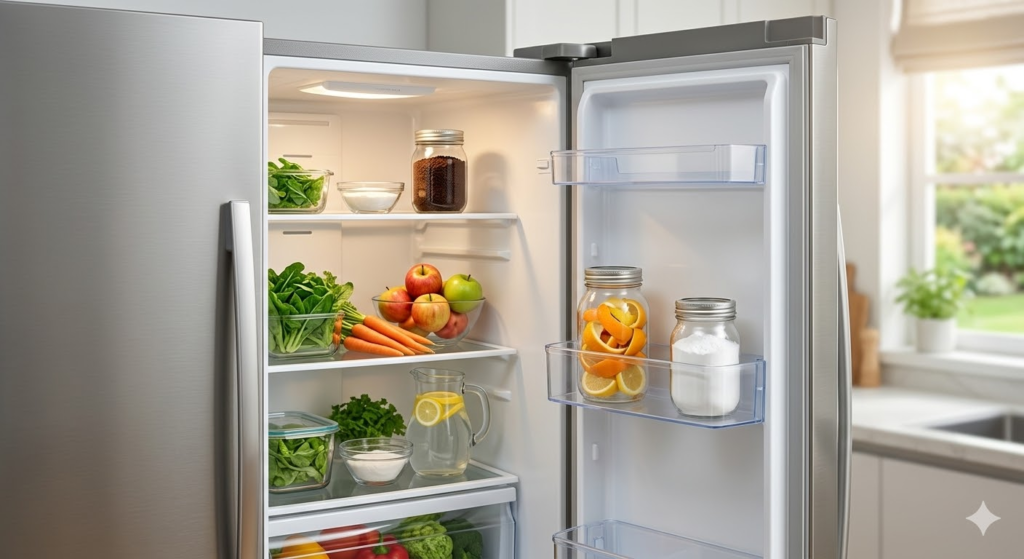
Have you ever found yourself in that awkward situation where you have guests over, you confidently open the fridge to grab some fruit, and—bam—a “mystery cloud” of odors hits you? It’s that strange mix of last night’s fish curry, a ripe durian, and some wilted cilantro that makes you want to slam the door shut immediately.
The refrigerator is the heart of the kitchen, but without proper care, it can quickly become a source of anxiety. In the past, I tried those chemical air fresheners from the supermarket. Sure, they smelled “floral,” but that synthetic scent ended up soaking into my butter, milk, and fruit. It felt like I was eating soap!
After a lot of trial and error, I discovered the “holy grail” of freshness using cheap, everyday ingredients from my pantry. Today, I’m sharing my personal “fridge detox” roadmap—100% natural, incredibly effective, and completely chemical-free.
1. Why Does Your Fridge Smell (Even After Cleaning)?
Before we dive into the solutions, we need to understand the enemy. A refrigerator is a sealed environment. While the cold slows down food decay, it doesn’t stop it entirely.
The Scent Cycle: Foods that aren’t sealed tightly release odor molecules into the air. Other foods (especially fats like butter and cheese) act like sponges and soak those smells right up.
Hidden Bacteria: That tiny drop of meat juice or soup spilled under a shelf is a five-star hotel for bacteria.
Humidity & Mold: The moist environment is a breeding ground for mold, especially in dark corners or inside the rubber door seals (gaskets).
2. Five “Kitchen Heroes” for Natural Deodorizing
These are the ingredients I swear by. They are safe for your family, eco-friendly, and cost almost nothing.
2.1. Coffee Grounds – The Heavy-Duty Absorber
Never throw away your coffee grounds! Coffee contains nitrogen, which helps neutralize sulfur gas—the main culprit behind “rotten” smells.
My Method: I dry the used grounds under the sun (or pop them in the microwave for 60 seconds) to prevent mold. Then, I put them in a small bowl or a breathable mesh bag and place it in the back of the fridge.
The Result: Within 24 hours, pungent smells are gone, replaced by a very faint, pleasant roasted aroma.
2.2. Citrus Peels – Zesty Freshness
Orange, lemon, and grapefruit peels contain natural essential oils (limonene). These aren’t just scents; they are mild antibacterial agents.
Pro Tip: Instead of using fresh peels, I prefer to dry them slightly first. This concentrates the oils. I tuck them into the crisper drawer to keep the vegetables smelling garden-fresh.
Note: Replace them every 3–5 days once they dry out and lose their fragrance.
2.3. Baking Soda – The Acid Neutralizer
Baking soda ($NaHCO_3$) is a “clean freak’s” best friend. It doesn’t just mask smells; it chemically reacts with acidic and basic odor molecules to neutralize them.
How I Use It: I pour about half a box into a wide-mouth bowl. Remember: the wider the bowl, the more surface area is exposed to the air, and the faster it works.
Longevity: This is a marathon runner. One bowl can keep your fridge fresh for 1 to 2 months.
2.4. White Vinegar – The All-In-One Disinfectant
White vinegar contains acetic acid, which is strong enough to kill mold and bacteria while neutralizing alkaline odors (like fish smells).
The Jar Method: Place a small open cup of vinegar in the corner. It will evaporate slowly and neutralize the air.
The Spray Method: I mix a 1:1 ratio of vinegar and water in a spray bottle. It’s my go-to for wiping down shelves. It’s the safest way to clean food-contact surfaces.
2.5. Fresh Lemon and Salt – The Emergency Reset
This duo is perfect if your fridge just suffered a “spoiled food incident.”
The Method: Cut a lemon in half, khía (score) the surface slightly, and sprinkle a generous layer of sea salt over it. Place it on a small plate. The salt absorbs moisture and traps odors, while the lemon releases a powerful, disinfecting scent.
3. My 4-Step “Deep Clean” Protocol
Putting coffee grounds in a dirty fridge is just a temporary cover-up. Every two weeks, I follow this routine to make sure the funk doesn’t come back:
Purge and Sort: Be ruthless. Toss the expired condiments and that 3-day-old takeout you know you won’t eat.
Clean the Cracks: Smells often hide in the rubber door seals. Use an old toothbrush dipped in vinegar to scrub away any black mold spots.
Smart Organization: * Top Shelf: Ready-to-eat foods and leftovers (always in glass containers).
Middle Shelf: Dairy and eggs.
Bottom Shelf: Raw meat (keep these in sealed bins to prevent juices from leaking).
Air Circulation: Never overstuff your fridge. Cold air needs space to move. If the air is blocked, “hot spots” form, and food spoils faster.
4. Small Habits for a Forever-Fresh Fridge
Maintenance is easier than a cure. I’ve adopted these three simple rules:
Glass over Plastic: Glass containers don’t absorb food odors like plastic does, and they are much easier to sanitize.
The “Wipe Immediately” Rule: If milk spills, wipe it with vinegar right away. Don’t wait for it to sour.
The 30-Second Audit: Every morning when I grab milk for coffee, I do a quick scan for anything that looks like it’s about to go bad.
Conclusion
Keeping your fridge fresh doesn’t have to be expensive or involve harsh chemicals. With just coffee grounds, citrus peels, or a bit of vinegar, you can protect your family’s health and make every meal more enjoyable.
A few small changes in your routine today will make a world of difference. Your nose (and your guests) will thank you!
Do you have a secret fridge-cleaning hack? Drop a comment below and share it with me!