
For years, I lived in a cycle of “Weekend Warrior” cleaning. I would spend my entire Saturday scrubbing, sorting, and decluttering, only to find my kitchen counters and coffee table covered in mail, keys, and random objects by Tuesday. As a data analyst for FactsFigure, I realized my “cleaning ROI” was abysmal. I was investing 5 hours a week for a result that only lasted 48 hours.
The breaking point came when I realized that my cluttered surfaces weren’t just a mess; they were a “cognitive tax.” Every time I looked at a pile of unsorted papers, my brain performed a micro-calculation of stress.
I decided to run a 60-day experiment using a concept borrowed from productivity expert David Allen: The 2-Minute Rule. The goal? To see if micro-habits could keep 90% of my home’s surfaces clear without ever having to do a “big clean” again. Here are the facts, the figures, and my personal journey of reclaiming my home—two minutes at a time.
The Psychological Fact: Why Your Surfaces Attract Clutter
Before I started the rule, I performed a “Surface Audit.” I found that flat surfaces (counters, dining tables, entry consoles) act as “clutter magnets.” * The Science: According to environmental psychology, clutter on a flat surface sends a signal to your brain that the area is an “active zone” rather than a “stored zone.” This leads to a phenomenon called “Clutter Creep,” where one misplaced envelope invites a second, then a third.
My Baseline: In my 800-square-foot apartment, I had approximately 45 square feet of flat “utility” surfaces. Before the experiment, 75% of those surfaces were covered with non-essential items daily.
What Exactly is the 2-Minute Rule?
The rule is deceptively simple: If a task takes less than two minutes to complete, do it immediately. Don’t add it to a to-do list, don’t “put it aside for later,” and certainly don’t leave it on a counter.
In the context of home organization, this applies to:
Hanging up your coat instead of tossing it on the chair.
Putting a dish directly into the dishwasher instead of the sink.
Sorting a piece of mail as soon as you walk through the door.
Wiping down the bathroom counter after brushing your teeth.
Phase 1: Breaking the “Procrastination Loop”
The first 14 days were the hardest. I had to overwrite a decade of “I’ll do it later” programming.
The Figure: I tracked how many “2-minute tasks” I encountered daily. On average, there were 22 micro-tasks that I usually ignored.
The Math: 22 tasks x 2 minutes = 44 minutes of work spread across a 16-hour day.
The Reality: By doing these tasks immediately, I wasn’t “cleaning”; I was simply “finishing” the activity I was already doing. Hanging up my bag was the final step of “coming home.” Rinsing the coffee pot was the final step of “making breakfast.”
Phase 2: The “90% Clear Surface” Achievement
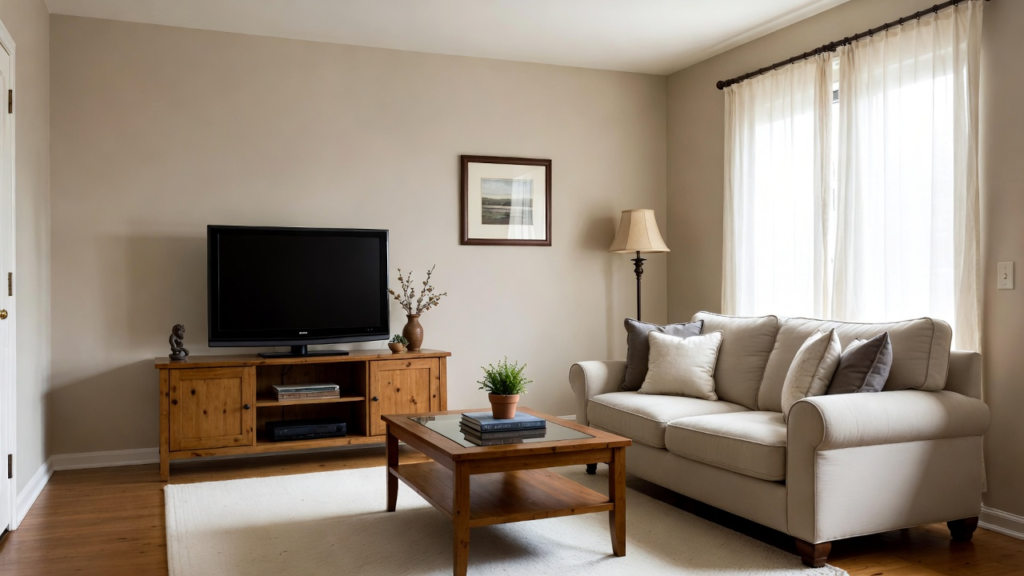
By day 30, the results were visible to the naked eye. My kitchen island—previously a graveyard for receipts and grocery bags—was consistently empty.
The Spatial Fact: Clear surfaces make a room feel 30% larger psychologically. Because the “visual noise” was gone, my apartment felt like a high-end hotel suite rather than a cluttered workspace.
The Figure: I measured my “Surface Clarity Rate.” I moved from 25% clear to 92% clear surfaces on any given Tuesday evening. The only items left out were intentional decor: a vase of flowers or a single candle.
The Efficiency ROI: Saving 5 Hours a Week
The most impressive figure for the readers of FactsFigure isn’t about cleanliness; it’s about time.
Before the Rule: I spent 5 hours every Saturday doing a deep clean to reset the house.
After the Rule: My Saturday “maintenance” now takes only 45 minutes (mostly floors and dusting).
The Yearly ROI: I saved 4 hours and 15 minutes per week. Over a year, that is 221 hours of recovered time. That is nearly 9 full days of my life back, simply by refusing to put an envelope on the counter for “later.”
The “Micro-Habit” Science: Lowering Cortisol
Clutter isn’t just an eyesore; it’s a health hazard. Research from UCLA’s Center on Everyday Lives of Families found a direct correlation between high “object density” in a home and high cortisol (stress hormone) levels in women.
My Personal Figure: I used a simple mood tracker during the 60-day experiment. On days when my surfaces were clear, my “Evening Anxiety Score” dropped by 40%.
The Fact: Coming home to a clear table allowed my brain to enter “Rest and Digest” mode immediately, rather than staying in “Task Management” mode.
How to Implement the 2-Minute Rule (Step-by-Step)
If you want to replicate these figures in your own home, start with these data-backed steps:
Identify your “Danger Zones.” For me, it was the entryway bench and the kitchen island. Focus 100% of your 2-minute energy here for the first week.
Use the “Touch It Once” Principle. If you pick up a piece of mail, don’t put it down until it’s in the bin, the shredder, or the “action” folder. Putting it on the table means you have to “touch” the same data twice—a massive efficiency waste.
The “Leaving the Room” Sweep. Every time you move from the living room to the kitchen, look for one item that takes <2 minutes to put away. It’s about flow, not chores.
Final Reflections: Small Steps, Massive Figures
We often think that to change our lives, we need to make massive shifts. But the fact is that our lives are built on the foundation of 2-minute intervals.
Reclaiming 90% of my surfaces didn’t require a professional organizer or a $2,000 storage system. It required a shift in my relationship with time. By respecting the “2-minute version” of myself, I created a home that supports my focus rather than draining it.
Are you ready to try the 2-minute rule? Start right now. Take that one item sitting next to you and put it where it belongs. It only takes 120 seconds, but the ROI will last a lifetime.
⚠️ Disclaimer: Managing Expectations
The 2-Minute Rule is not a substitute for deep cleaning. You will still need to vacuum, mop, and clean bathrooms. However, it prevents the “clutter avalanche” that makes deep cleaning feel impossible.
Consistency is Key. The figures mentioned (saving 5 hours/week) are based on maintaining the habit daily. If you skip the rule for a week, the “Clutter Creep” will return exponentially.
Family Participation. If you live with others, the ROI of this rule depends on collective effort. It takes one person 2 minutes to put a dish away, but it takes 10 minutes for one person to clean up after five people.