
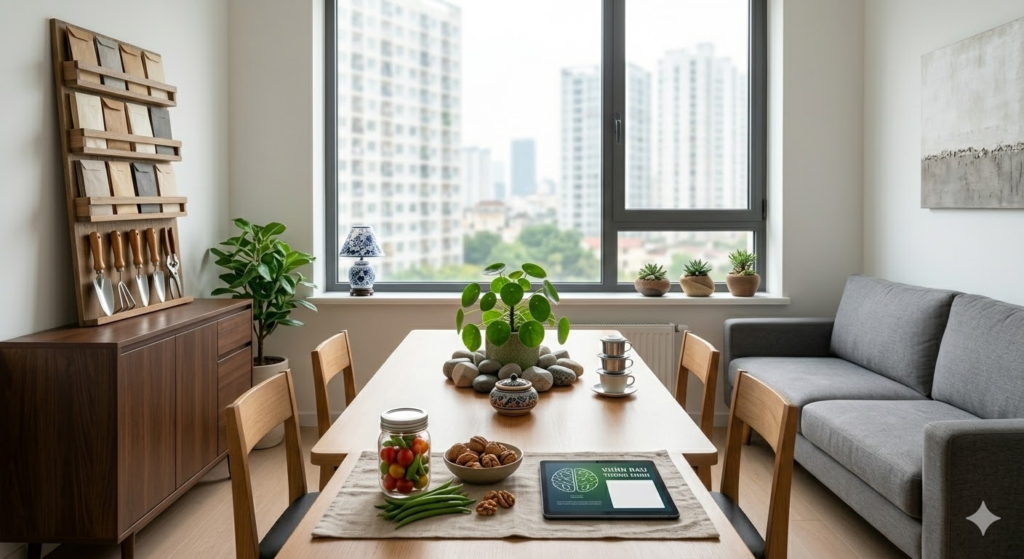
Have you ever felt overwhelmed by the very things meant to bring you comfort? A few months ago, I realized my home—a place that should be my sanctuary—had become a source of subtle, constant stress. As someone who lives by facts and figures, I decided to run a controlled experiment: The 30-Day Decluttering Challenge.
My goal was simple but ambitious: identify and remove 100 unnecessary items from my living space. I didn’t just want a cleaner house; I wanted to see how physical clutter affected my mental clarity and daily productivity. Here is the honest breakdown of my journey, what I discovered about myself, and why “less” truly became “more.”
The Moment of Realization
The idea for this challenge didn’t come from a home decor magazine. It came from a Tuesday afternoon when I spent 15 minutes looking for a stapler that I knew was on my desk. My desk was a mountain of old receipts, half-used notebooks, and three different coffee mugs.
I felt a tightening in my chest. According to neuroscience, physical clutter competes for our attention, raising cortisol levels. I wasn’t just messy; I was biologically stressed. That evening, I grabbed a cardboard box and a marker. I wrote “Day 1” on it, and the journey began.
Starting with the “Zombie Items” in the Kitchen
I decided to start in the kitchen because it’s the heart of the home, but also the graveyard of impulse buys. I found “zombie items”—things that were technically functional but dead to me.
For instance, I found a specialized avocado slicer I had used exactly once in 2022. Next to it were three different spatulas when I only ever use one. By the end of the first week, I had removed 32 items.
The change was instant: My morning coffee routine felt lighter. I didn’t have to fight a drawer full of mismatched lids just to find a frying pan. I realized that every item I removed gave me back 10 seconds of my life every day.
The Emotional Battle in the Closet
Week three was where things got difficult. Tackling the bedroom closet wasn’t just about cleaning; it was about facing my “past self.” I found clothes I kept “just in case” I lost weight or “just in case” a specific fashion trend came back.
I had to ask myself a hard question: “Am I keeping this because it adds value to my life today, or because I feel guilty about the money I spent?” Letting go of a jacket I bought five years ago felt like admitting a mistake. But once it was in the donation box, that guilt vanished. I replaced it with a sense of relief. I discovered that we often hold onto clutter because we are afraid of the future, but clearing that space allowed me to breathe in the present.
The Digital and Paper Purge
As I moved toward my goal of 100 items, I looked at my home office. This is where my “Modern Workspace” (as you saw in my previous post) truly took shape. I tackled a drawer full of old charging cables for phones I haven’t owned in a decade.
I shredded stacks of old bank statements from 2018. I realized that 90% of the “important papers” I was saving were available online in seconds. Removing these physical piles felt like a literal weight lifting off my shoulders. My focus improved. I no longer looked at my desk and felt a long list of “to-dos.” Instead, I saw a blank canvas for my work.
Reaching the 100th Item
The final push was in the garage. The 100th item was a large, broken floor lamp I had been “meaning to fix” for over two years. Giving myself permission to just let it go was incredibly freeing.
I didn’t just throw things away. I made sure to donate 60% of what I found to local charities and recycled the rest. Knowing my “clutter” was becoming someone else’s “useful item” made the process feel like a positive cycle rather than a wasteful one.
My Final Reflection: What I Actually Gained
After 30 days, I didn’t just have more cabinet space. I had a new mindset. Here is what the experience taught me:
Decision Fatigue is Real: When you have fewer choices (fewer shirts, fewer mugs, fewer pens), your brain saves energy for important decisions.
Space is a Luxury: A clean countertop is worth more than a $50 gadget you never use.
Clutter is a Procrastination Tool: We often “organize” our clutter to avoid doing the real work. Once the clutter is gone, there’s nowhere to hide.
Today, my home office is my favorite place to be. It’s minimal, functional, and peaceful. I’ve found that my productivity has nearly doubled because I’m no longer fighting my environment—I’m supported by it.
How You Can Start Your Journey
If you’re feeling overwhelmed by your space, don’t try to fix it in a weekend. Follow the “Rule of One”: Pick one drawer, find one item you don’t need, and put it in a box.
You don’t need a fancy system. You just need to start. The facts show that our surroundings shape our minds. If you want a clearer, more focused life, start by clearing the 100 things that are holding you back.