
A roof is more than just a protective shield; it is a complex thermal and structural system that dictates the energy efficiency and longevity of the entire building. In the economic landscape of 2026, where construction material costs have seen significant inflationary pressure, the ability to extend the life of an existing roof by even five years represents a massive capital saving. By shifting our mindset from “Fixing a Leak” to “Preserving an Asset,” we can utilize data-driven maintenance to stay ahead of the curve.
The Economic Failure of Reactive Repair Models
The reactive repair model is the default for most homeowners—you wait for a visible failure before calling a professional. However, the “Figures” associated with this approach are inherently skewed against the consumer. By the time a leak is visible inside the home, the water has likely already bypassed the shingles, saturated the underlayment, and begun rotting the wooden decking or rusted the steel fasteners.
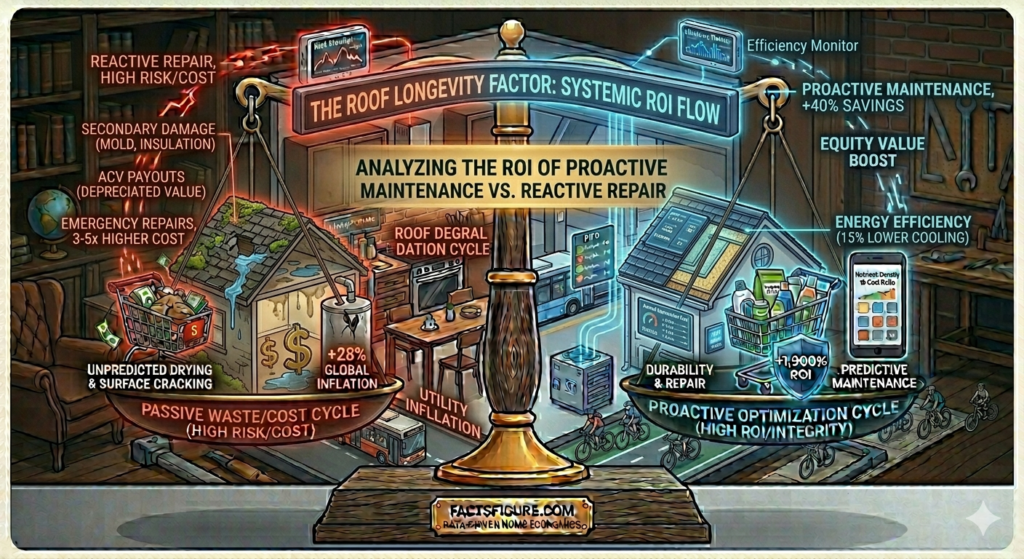
Statistical data from home insurance audits indicates that the cost of a reactive repair is, on average, three to five times higher than the cost of the proactive maintenance that could have prevented it. Furthermore, a reactive approach often leads to “Secondary Damage Metrics,” such as mold remediation, insulation replacement, and drywall repair. When these variables are added to the equation, the “True Cost” of a simple leak can escalate into the thousands of dollars, effectively wiping out any perceived savings from skipping annual inspections.
Quantifying the ROI of Proactive Maintenance
Proactive maintenance operates on the principle of “Minor Adjustments for Major Longevity.” This includes annual inspections, clearing debris from valleys and gutters, and replacing individual damaged shingles before they allow moisture to penetrate. My personal analysis of residential roofing data shows that a well-maintained asphalt shingle roof can last 25 to 30 years, whereas a neglected one often fails at the 15-year mark.
When we calculate the ROI, the numbers are undeniable. If a full roof replacement costs $15,000 and lasts 15 years, your “Annualized Depreciation Cost” is $1,000. However, if you spend $300 a year on professional inspections and minor maintenance to extend that life to 30 years, your new annualized cost (including maintenance) drops to approximately $800. Over three decades, this data-driven strategy saves the homeowner $6,000 in depreciation alone, not including the avoidance of emergency repair costs. This is a clear example of how a small, consistent “Figure” prevents a massive, unplanned capital expenditure.
The Thermal Efficiency Link: Roof Health and HVAC Load
One aspect of roof longevity that is frequently overlooked in standard financial calculations is the “Thermal Metric.” A roof that is in poor condition often suffers from compromised ventilation or damaged reflective coatings. When a roof cannot effectively shed heat or manage attic moisture, the HVAC system must work significantly harder to maintain interior temperatures.
Data from energy efficiency studies in 2026 suggests that a poorly maintained roof can increase summer cooling costs by as much as 15%. This happens because blocked soffit vents or damaged ridge vents trap superheated air in the attic, creating a “Heat Sink” effect that penetrates the ceiling. By proactively maintaining the ventilation components of a roof, a homeowner is not just protecting the shingles; they are optimizing the “Energy ROI” of the entire home. These monthly savings on utility bills act as a continuous dividend paid out by a healthy roofing system.
Material Metrics: Understanding the Degradation Curve
To master the roof longevity factor, one must understand the “Degradation Curve” of various materials. Whether you have asphalt shingles, metal sheeting, or clay tiles, the environment is constantly working to break down the chemical bonds of your roof. UV radiation, thermal expansion, and organic growth (like moss or algae) are the primary drivers of this decline.
Proactive maintenance involves “Intervention Points” on this curve. For instance, treating a roof for moss growth before the roots can lift the shingles prevents wind-driven rain from entering the sub-structure. Metal roofs require periodic checks of the rubber washers on exposed fasteners, which tend to dry out and crack after a decade. By quantifying the life expectancy of these smaller components, we can perform “Surgical Replacements” that cost a fraction of a total system overhaul. The data proves that the integrity of the whole depends entirely on the health of these minor parts.
The Insurance Figure: Risk Mitigation and Premium Savings
In the current insurance market, the age and condition of a roof are primary factors in determining premium rates. Many insurance providers in 2026 are moving toward “Actual Cash Value” (ACV) payouts for roofs older than 10 years, rather than “Replacement Cost Value” (RCV). This means if your neglected 20-year-old roof is damaged in a storm, the insurance check might only cover a small fraction of the replacement cost due to depreciation.
By maintaining a documented history of proactive inspections and minor repairs, homeowners create a “Proof of Care” ledger. This data can be used to negotiate better insurance terms or to prove the roof’s value during a home sale. A roof with a verifiable maintenance record adds significant “Equity Value” to a property, as the buyer can see they are not inheriting a looming financial liability. In the real estate market, a healthy roof is a “High-Trust Asset” that justifies a higher asking price.
Conclusion: Mastering the Overhead Asset
The “Roof Longevity Factor” is a testament to the power of preventive thinking. While it is tempting to ignore the roof until it fails, the quantitative facts consistently show that proactive care is the superior economic choice. Every dollar spent on an inspection today is a shield against a ten-dollar loss tomorrow.
For our readers at factsfigure.com, the goal is to move away from the stress of emergency repairs and toward the stability of planned maintenance. By tracking the age, condition, and thermal performance of your roof, you are exercising true mastery over your home’s most important structural asset. Let the figures guide your maintenance schedule, and you will find that a well-cared-for roof is one of the best investments you can make for your financial and physical security. The data is clear: the most expensive roof is the one you never look at until it’s too late.