

A year ago, I stood in my kitchen, staring at a trash can overflowing with plastic film, wilted spinach, and takeout containers. It hit me: my kitchen was the “ground zero” of my environmental footprint. Like many, I wanted to live more sustainably, but the term “Zero Waste” felt intimidating—reserved for people who could fit a year’s worth of trash into a single mason jar.
However, I decided to try a more realistic approach. By implementing seven simple, intentional habits, I managed to reduce my monthly kitchen trash by 50% in just 90 days. Not only did my bin get lighter, but my grocery bill dropped, and my kitchen felt more organized and peaceful.
If you are looking to simplify your life and help the planet, here is my personal guide to a Zero Waste Kitchen.
1. The Art of “Strategic Grocery Shopping”
The biggest source of waste isn’t what we throw away; it’s what we buy unnecessarily. I used to go to the store with a vague idea of what I wanted, leading to impulse buys and “revenge shopping” on an empty stomach.
Meal Planning is Your Best Friend
I started dedicating 20 minutes every Sunday to Meal Planning. I check what is already in my pantry and fridge before writing a list. By buying only what I have a plan for, I stopped throwing away softened cucumbers and expired yogurt.
Choose “Naked” Produce
Whenever possible, I opt for loose vegetables rather than those wrapped in plastic or sitting on styrofoam trays. Not only does this eliminate immediate trash, but it often saves money since you aren’t paying for the weight of the packaging.
2. Ditching the “Plastic Habit” with Reusable Gear
Single-use plastics are the silent “trash-fillers” of the kitchen. Switching to reusables was my first big win.
The Power of the Tote Bag
Most of us have a “bag of bags” under the sink. I stopped adding to mine by keeping a few canvas tote bags in my car and a foldable one in my backpack. If I forget them, I challenge myself to carry the items by hand—a great way to remind myself not to forget next time!
Bulk Shopping with Jars
I started visiting the “Bulk Section” of my local grocer. Instead of buying a new plastic bag of rice or lentils every time, I bring my own glass jars or lightweight cloth bags. Pro tip: Make sure to “tare” (weigh) your empty jar first so you don’t pay for the weight of the glass!
3. Mastering Food Storage to Extend “Shelf Life”
Food waste is a massive contributor to landfills. According to some studies, nearly 30-40% of the food supply in the US goes to waste. In my kitchen, this was often due to improper storage.
The FIFO Method
I adopted the “First In, First Out” rule. When I get home from the store, I move the older items to the front of the fridge and put the fresh ones in the back. This simple visual cue ensures that nothing gets lost in the “black hole” of the back shelf.
Reviving Wilted Veggies
Did you know that limp celery or carrots can be revived? I started placing them in a jar of water (like a bouquet) in the fridge. They soak up the moisture and become crunchy again in hours. For herbs, I wrap them in a damp cloth to keep them fresh for up to two weeks.
4. Rethink “Scraps”: From Trash to Treasure
Before I started this journey, I viewed onion skins, carrot peels, and herb stems as garbage. Now, I see them as ingredients.
The “Stock Bag” Technique
I keep a large silicone bag in my freezer. Every time I peel a vegetable or trim the ends off leeks, the scraps go into the bag. Once it’s full, I simmer the contents in a pot of water for an hour. The result? Homemade, zero-waste vegetable stock that tastes better than anything in a carton.
DIY Cleaning Solutions
Lemon and orange peels are natural degreasers. I started soaking my citrus peels in a jar of white vinegar for two weeks. After straining, I have a powerful, non-toxic, and free kitchen cleaner that smells amazing.
5. Swapping Disposable Tools for Sustainable Alternatives
Our kitchens are often filled with items designed to be used once and thrown away. I slowly replaced these as they ran out.
From Paper Towels to Cloth Rags
The average household uses dozens of paper towel rolls a year. I cut up old, stained cotton T-shirts and towels into squares. These “un-paper towels” handle spills better than paper and go straight into the laundry.
Beeswax Wraps over Plastic Film
Plastic wrap is annoying to use and impossible to recycle. I switched to Beeswax Wraps. They are breathable, washable, and compostable. They seal around bowls using the warmth of your hands and last for about a year.
6. Embracing the “DIY” Kitchen Culture
Industrial food processing generates an incredible amount of hidden waste. By making a few staples at home, I eliminated dozens of plastic bottles and cans every month.
Better Beverages
I stopped buying bottled sparkling water and switched to a carbonator. For milk, I started making Oat Milk at home. It takes 30 seconds to blend oats and water, and it eliminates those tetrapak cartons that are notoriously difficult to recycle.
Fermentation and Preservation
I rediscovered the joy of pickling. If I have leftover cabbage or cucumbers, I turn them into sauerkraut or quick pickles. It’s a great way to save food and improve gut health at the same time.
7. The Final Piece: Composting
Even with the best habits, there will be some organic waste—like eggshells or avocado pits. Sending these to a landfill is a waste of nutrients and creates methane gas.
Composting in Small Spaces
I live in an apartment, so a giant backyard compost pile wasn’t an option. I invested in a Bokashi bin (a fermentation-based system) and a small countertop bin. It doesn’t smell, and it turns my scraps into “pre-compost” that I give to a local community garden.
Seeing my “real” trash can stay empty for days while the compost bin fills up is incredibly satisfying. It’s the ultimate proof that my habits are working.
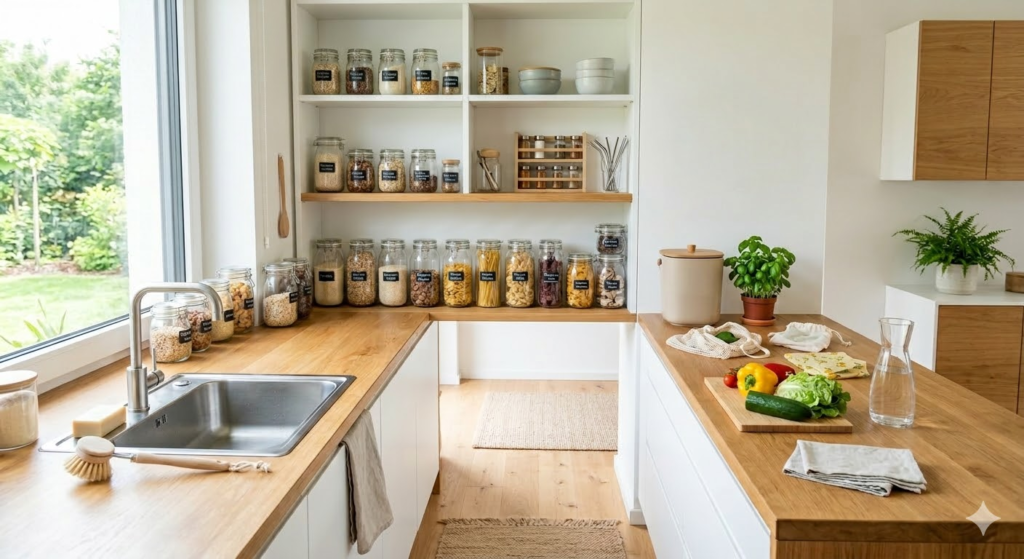
The Challenges: Progress over Perfection
I want to be honest: my kitchen is not 100% zero-waste. There are days when I’m tired and order a pizza (complete with the cardboard box and little plastic “table”). There are items I haven’t found a plastic-free alternative for yet.
The goal isn’t perfection; it’s mindfulness. When you start paying attention to what you throw away, you naturally start making better choices. You don’t need to buy a whole new set of “eco-friendly” gadgets to start. In fact, the most sustainable thing you can do is use what you already have.
Conclusion: A Lighter Home and a Lighter Heart
Reducing my kitchen trash by half didn’t require a radical lifestyle overhaul. It required seven simple shifts in how I buy, store, and value food. Today, my kitchen feels like a place of creation rather than consumption.
If you’re feeling overwhelmed, just pick one habit from this list. Start with the “Stock Bag” or the reusable tote. Once that feels natural, add another. Small changes, when multiplied by millions of people, can truly change the world.