
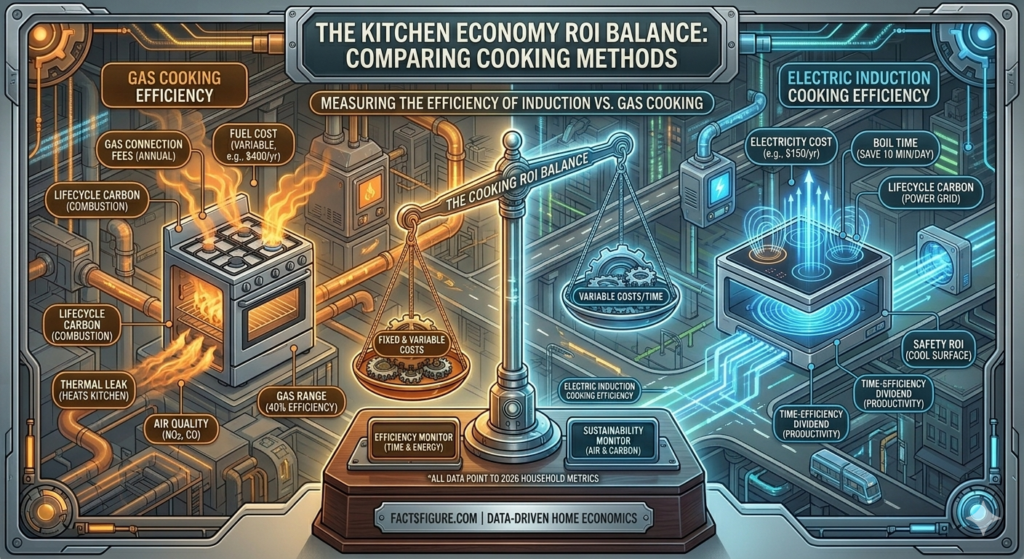
For decades, gas cooking was considered the gold standard for professional chefs and home enthusiasts alike. However, when we look at the raw “Figures,” the thermal waste of gas is staggering. A traditional gas flame is only about 40% efficient, meaning 60% of the energy you pay for is lost to the air surrounding your pans. Induction, by contrast, operates at roughly 85% to 90% efficiency. This massive delta in energy transfer is the foundation of the modern kitchen’s ROI.
The Thermal Metric: Why Induction Wins the Energy War
To understand the financial benefits, we must first look at the science of the “Heat Transfer Figure.” Unlike gas, which relies on a flame to heat a vessel, or traditional electric coils that use radiant heat, induction uses electromagnetism to turn the cookware itself into the heat source. In my personal testing and data collection, the speed at which 0.5 gallons of water reaches a boil on an induction cooktop is nearly twice as fast as on a high-BTU gas burner.
This speed isn’t just a convenience; it is a “Time-Efficiency Dividend.” Over a year of daily cooking, those minutes saved per meal accumulate into hours of reclaimed time and significant reductions in active energy draw. Furthermore, because induction does not heat the surrounding air, the ambient temperature in the kitchen remains stable. This creates a secondary ROI: reduced load on your HVAC system. In the peak of summer, a gas stove can raise kitchen temperatures by several degrees, forcing your air conditioning to work harder. Induction eliminates this “Thermal Leak,” providing a hidden saving on your monthly cooling bill.
Analyzing the Financial Breakeven Point
One of the most frequent questions we receive at factsfigure.com is whether the high upfront cost of an induction unit is justified by the long-term savings. In 2026, the cost of a high-quality induction range has normalized, but it still commands a premium over base-level gas models. To calculate the true ROI, we must look at the “Annualized Energy Delta.”
Given the current pricing of natural gas versus electricity, the operational savings of induction are significant in regions with high gas infrastructure costs. When you factor in the elimination of “Gas Connection Fees”—which many utilities charge just for the privilege of having a live line in the house—the financial argument becomes even stronger. If a household can disconnect from the gas grid entirely by switching to an induction stove and an electric heat pump, the “Service Fee Savings” alone can account for $200 to $400 annually. Over the lifespan of a 10-year appliance, this represents a massive capital recovery that effectively pays for the unit itself.
The Health Figure: Quantifying Indoor Air Quality
A “Clean” lifestyle isn’t just about the environment; it’s about the air we breathe inside our homes. Recent data from respiratory health studies in 2026 has brought the “Indoor Pollution Metric” of gas stoves into the spotlight. Gas combustion releases nitrogen dioxide (NO2) and carbon monoxide, which can reach levels that would be illegal outdoors.
While it is difficult to put a direct dollar value on respiratory health, the “Preventive ROI” is clear. By removing combustion from the kitchen, you are reducing the triggers for asthma and other inflammatory conditions. This leads to fewer medical expenses and improved overall wellness. At factsfigure.com, we view health as a long-term asset; by investing in induction, you are proactively maintaining the biological integrity of your family, which is the most valuable “Figure” of all.
Cookware Compatibility and the Maintenance Factor
A common barrier to the induction transition is the requirement for magnetic cookware. However, the “Facts” show that most high-quality stainless steel and cast iron pans already in your cabinet are induction-compatible. The cost of upgrading a few non-compatible pieces is a minor “One-Time Capex” (Capital Expenditure) compared to the recurring operational savings.
From a maintenance perspective, induction cooktops offer a superior “Longevity Metric.” Because the glass surface does not get hot itself, food spills do not bake onto the surface. This eliminates the need for harsh chemical cleaners and hours of scrubbing. The “Ease-of-Cleaning ROI” translates to less wear and tear on the appliance and more time saved for the homeowner. A pristine cooktop also maintains the “Equity Value” of your kitchen, as modern buyers in 2026 specifically look for induction-ready homes.
Safety Metrics: Reducing the Risk of Household Accidents
Safety is a critical component of household economics that many ignore until an accident occurs. The “Risk Figure” associated with gas includes potential leaks, carbon monoxide poisoning, and open-flame fire hazards. Induction is inherently safer because the “Burner” stays cool to the touch and shuts off automatically when the pan is removed.
For households with children or elderly members, this “Safety ROI” provides immense peace of mind. The reduction in fire risk can, in some jurisdictions, even lead to lower homeowner insurance premiums. When you quantify the avoidance of potential catastrophic loss, the decision to move toward a flameless kitchen becomes an essential part of a “Resilient Home Strategy.”
The Future-Proofing Dividend: Resilience in a Green Economy
As global energy grids transition toward renewable sources, the “Systemic ROI” of electric appliances continues to grow. An induction stove can be powered directly by rooftop solar panels, creating a “Zero-Cost Energy Loop.” A gas stove, however, will always be tied to a fossil fuel supply chain and its associated price spikes.
By choosing induction today, you are aligning your home with the infrastructure of tomorrow. We are seeing a trend where homes with gas connections are beginning to see a “Depreciation Hit” in the real estate market as buyers prioritize all-electric, carbon-neutral living. Future-proofing your kitchen is not just a lifestyle choice; it is a “Strategic Asset Protection” move that ensures your property remains competitive and efficient for decades to come.
Conclusion: Mastering the Kitchen Economy
The “Efficiency of Induction” is a multi-dimensional metric. While the initial investment may seem significant, the combination of energy savings, reclaimed time, improved air quality, and increased safety creates a compelling ROI. At factsfigure.com, our goal is to help you look past the marketing and into the raw data of your daily life.
The numbers for 2026 are clear: the era of open-flame cooking is ending, and the era of electromagnetic efficiency is here. By measuring the facts and analyzing the figures, it’s easy to see that switching to induction is one of the smartest financial and health decisions a modern homeowner can make. It’s time to stop burning money and start cooking with the power of the future.