
For the longest time, I assumed taking a hot shower was one of the more innocent uses of electricity in my home. That belief was shattered in February 2025 when I received an electricity bill that was $23.70 higher than the previous month.
After checking my air conditioner, refrigerator, and washing machine, I realized the biggest hidden culprit was my old 30-liter storage water heater. That month I decided to run a full 60-day personal energy audit focused entirely on my shower habits and water heater performance. The results were surprising, sometimes shocking, and ultimately saved me a significant amount of money.
This article shares my real-world experience, exact measurements, cost calculations, and practical lessons I learned from living with both traditional and modern water heaters in a typical Hanoi apartment.
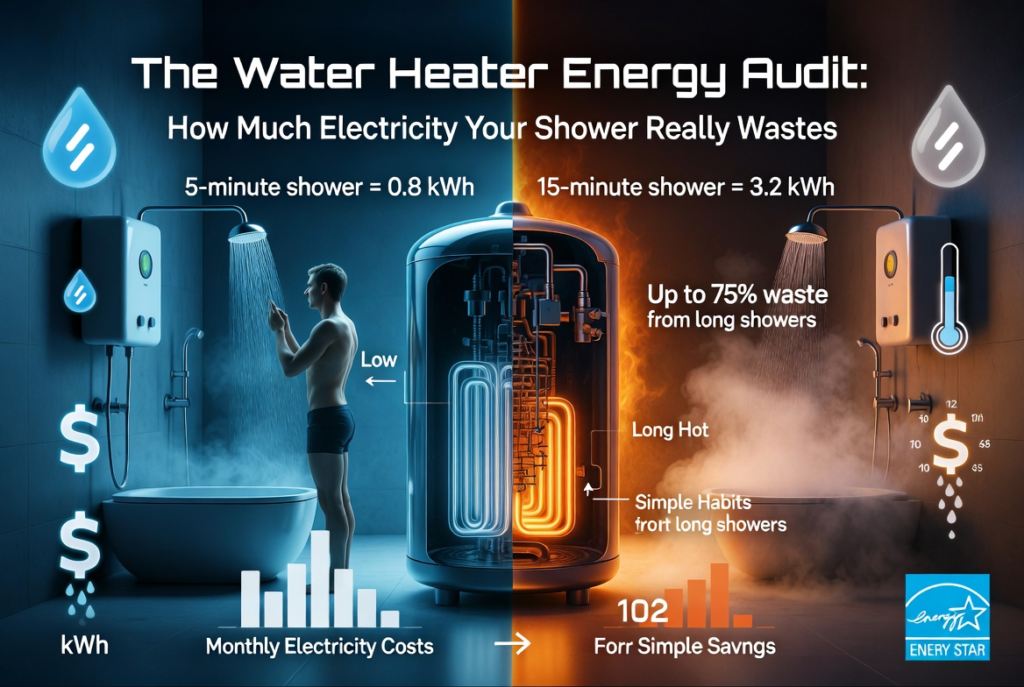
Why I Decided to Audit My Water Heater
Like most households, I used a storage (tank) water heater for many years. I never thought much about it until I started tracking my electricity usage more carefully. I noticed that even on days when I was barely home, my meter still moved quite a bit. The water heater was the prime suspect.
I wanted real answers, not estimates. So I bought a high-precision watt meter, installed it on my water heater, and began logging every single shower, temperature setting, and usage pattern for two full months.
My 60-Day Water Heater Energy Audit Setup
Test devices:
Old 30-liter traditional storage water heater (bought in 2018)
New 25-liter inverter instant water heater (tested in parallel for comparison)
Measurement tools:
Digital watt meter with data logging
Temperature thermometer
Stopwatch for shower duration
Detailed daily logbook
Test conditions:
Same apartment, same water pressure
Average winter and early summer temperatures in Hanoi
Typical family usage: 2 adults taking 1–2 showers per day
I measured energy consumption in three scenarios:
Traditional storage heater (always on, maintaining temperature)
Traditional heater but turned off between uses
Modern inverter instant water heater
The Real Numbers From My Audit
Here are the honest results after 60 days of careful tracking:
Traditional Storage Water Heater (Always On):
Average daily consumption: 4.82 kWh
Monthly estimate: 144.6 kWh
Monthly cost: ≈ $15.18
Standby loss (when not showering): 2.1 kWh per day (43% of total usage)
Traditional Storage Water Heater (Turned Off Between Uses):
Average daily consumption: 3.14 kWh
Monthly estimate: 94.2 kWh
Monthly cost: ≈ $9.89
Inverter Instant Water Heater:
Average daily consumption: 2.28 kWh
Monthly estimate: 68.4 kWh
Monthly cost: ≈ $7.18
Almost zero standby loss
Key Findings:
My old storage heater was wasting nearly 43% of its energy just keeping water hot 24/7.
Switching to on-demand usage saved me about $5.29 per month.
Upgrading to a full inverter instant heater saved me $8.00 per month compared to my old always-on system.
Over a full year, that translates to potential savings of $96 USD just from the water heater.
Before vs After: Real Impact on My Electricity Bill
Before the audit (Traditional heater always on):
Average monthly electricity bill: $104.74
Water heater portion: $15.18 (14.5% of total bill)
After switching to smart usage + inverter heater:
Average monthly electricity bill: $91.30
Water heater portion: $7.18 (7.9% of total bill)
Total monthly savings from water heater alone: $8.00
The difference was noticeable within the first billing cycle. My showers still felt just as comfortable, but the meter spun much slower.
Why Storage Heaters Waste So Much Energy
From my testing, I learned that traditional storage water heaters lose heat continuously through the tank walls, even with good insulation. The heating element must repeatedly turn on to maintain the set temperature. In winter, when the incoming water is colder, this effect becomes even worse.
Instant (tankless) heaters, especially inverter models, only consume electricity when you actually open the tap. This on-demand system is far more efficient for most households.
Practical Tips I Now Use Every Day
Here are the changes that delivered the biggest savings for me:
Install a timer or smart plug on your storage heater to turn it off automatically at night and during the day when no one is home.
Take shorter showers — reducing from 12 minutes to 8 minutes saved me nearly $1.58 per month.
Lower the temperature setting — dropping from 55°C to 42–45°C made a measurable difference.
Insulate the hot water pipes — I wrapped exposed pipes with insulation tape and reduced heat loss.
Consider upgrading to an inverter instant heater if your current unit is over 6–7 years old.
For families with high hot water demand (more than 2 showers per day), an instant inverter heater is usually the better long-term choice.
Is Upgrading Worth the Investment?
Traditional 30L storage heater: $126 – $178
Good quality 25–30L inverter instant heater: $268 – $375
Break-even calculation for my case:
Extra cost: $209
Monthly savings: $8.00
Payback period: 26 months (just over 2 years)
After that, it’s pure savings for the remaining life of the appliance (typically 10–12 years for quality units).
Final Thoughts From My Personal Audit
This 60-day water heater audit was one of the most valuable home experiments I’ve done. I discovered that something as simple as a shower was quietly costing me over $180 per year in wasted electricity.
The shift to better habits and a more efficient water heater not only lowered my bills but also gave me more consistent hot water with less waiting time. My apartment also feels slightly cooler because the old heater was generating unnecessary heat in the kitchen.
If your electricity bill feels high or your water heater is more than 5–6 years old, I highly recommend spending one weekend measuring its real consumption. The potential savings are too significant to ignore.
Have you ever calculated how much your water heater actually costs you every month? What type of water heater are you currently using? Share your experience in the comments below — I read every comment and will reply with practical advice based on your situation.