
Car Ownership Post-2024: A 5-Year Depreciation Audit of EVs vs. Gas Vehicles
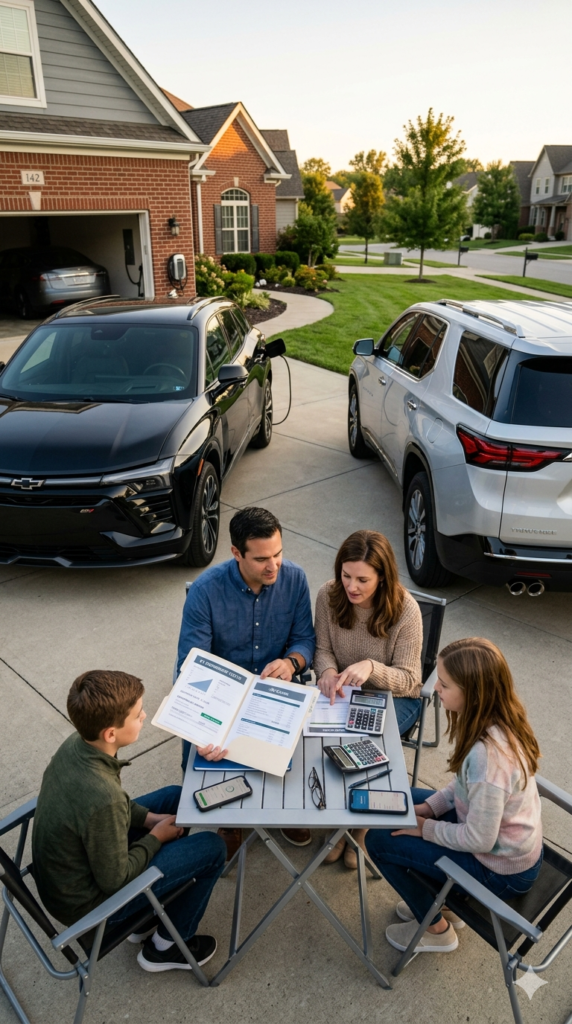
For years, Americans were told that electric vehicles would save money.
Lower fuel costs.
Less maintenance.
Fewer trips to repair shops.
And in many ways, that promise was true.
But by 2026, another reality has become impossible to ignore:
Depreciation.
The amount of value a vehicle loses over time has become one of the biggest financial factors affecting car owners across the United States.
For many families, depreciation now costs far more than fuel.
And the results may surprise you.
The Hidden Cost Most Buyers Ignore
When Americans shop for a vehicle, most focus on monthly payments.
Can I afford the payment?
Can I afford the insurance?
Can I afford the fuel?
Far fewer ask an equally important question:
What will this vehicle be worth five years from now?
That single number can determine whether a vehicle becomes a smart purchase or an expensive mistake.
A Real Experience From Arizona
In 2021, a software engineer in Arizona purchased a new electric SUV for approximately $62,000.
At the time, demand was soaring.
Used EVs often sold for nearly the same price as new ones.
The future looked bright.
Then the market changed.
Manufacturers lowered prices.
Competition increased.
Interest rates climbed.
Used EV inventory expanded dramatically.
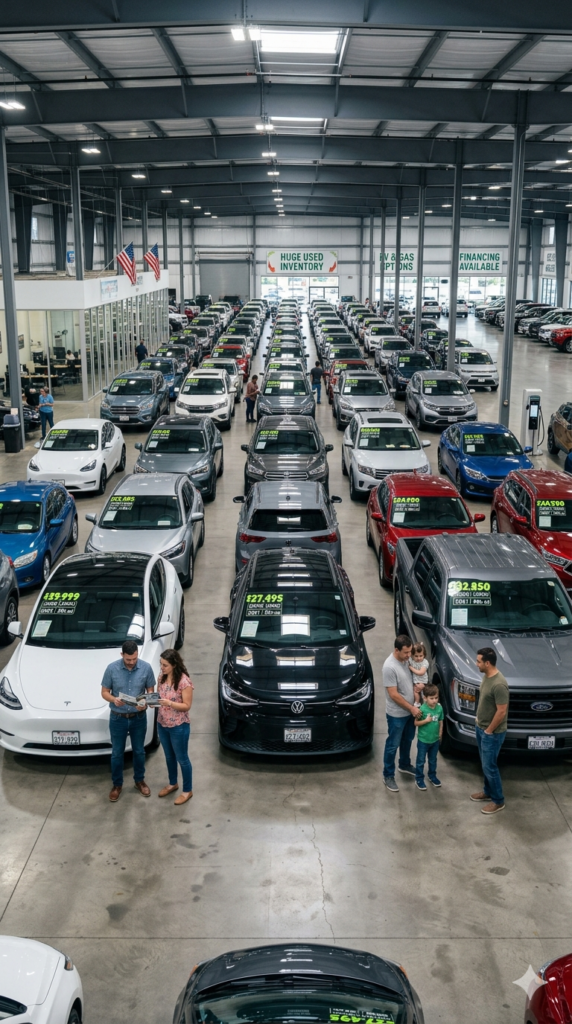
By 2026, vehicles similar to his were selling for nearly half of their original purchase price.
Although he saved thousands of dollars on gasoline, the depreciation was far larger than he expected.
His conclusion was simple:
“I love driving the vehicle. I just didn’t expect it to lose value this quickly.”
Why Electric Vehicles Lost Value Faster
Several factors pushed EV depreciation higher after 2024.
Technology evolved rapidly.
Every year brought longer battery range, faster charging speeds, and new software features.
As a result, older EV models aged more quickly in the eyes of buyers.
Price cuts also played a major role.
When manufacturers lowered the price of brand-new vehicles, used vehicle prices dropped immediately.
At the same time, many buyers remained concerned about battery longevity, even though modern batteries often last much longer than expected.
Whether justified or not, those concerns influenced resale values.
Why Some Gas Vehicles Performed Better
Not every gasoline vehicle held value equally.
However, several long-established models remained remarkably stable.
Vehicles such as the Toyota RAV4, Toyota Tacoma, Honda CR-V, and Honda Civic continued attracting strong demand.
Buyers trusted them.
Repair costs were predictable.
Parts were readily available.
And millions of drivers already knew what to expect.
That consistency helped support resale prices.
A Five-Year Comparison
Imagine two buyers entering the market in 2026.
Buyer A purchases a new electric vehicle for $45,000.
Five years later, the vehicle is worth approximately $18,000.
Total depreciation:
$27,000.
Buyer B purchases a gasoline crossover for $38,000.
Five years later, the vehicle is worth approximately $22,000.
Total depreciation:
$16,000.
Fuel savings may reduce part of the gap.
But depreciation remains the largest ownership expense for many drivers.

Where Electric Vehicles Still Shine
Despite depreciation concerns, EV ownership continues offering important advantages.
Charging at home often costs significantly less than purchasing gasoline.
Maintenance requirements remain lower.
Electric motors contain fewer moving parts.
Oil changes are eliminated.
Brake wear is reduced through regenerative braking systems.
Many owners also prefer the driving experience itself.
The vehicles are quiet.
Responsive.
Smooth in traffic.
For some drivers, those benefits outweigh financial considerations.
The Rise of the Used EV Market
One of the biggest opportunities in 2026 is the used EV market.
Because so much depreciation occurs during the first few years, buyers can now purchase relatively modern electric vehicles at substantial discounts.
A vehicle that originally sold for $50,000 may now be available for $28,000 or less.
For budget-conscious consumers, this creates attractive opportunities.
The Verdict in 2026
If your primary goal is preserving resale value, many gasoline vehicles continue outperforming electric alternatives.
If your goal is minimizing fuel and maintenance expenses, EVs remain highly competitive.
For many Americans, the best balance may be purchasing a lightly used electric vehicle rather than buying new.
The biggest lesson is simple.
Vehicle ownership is no longer just about fuel.
It is about total cost.
And depreciation remains the number most drivers underestimate.
Before buying your next vehicle, ask one important question:
How much value will it lose while sitting in your driveway?
Because over five years, that answer may matter more than anything else.