
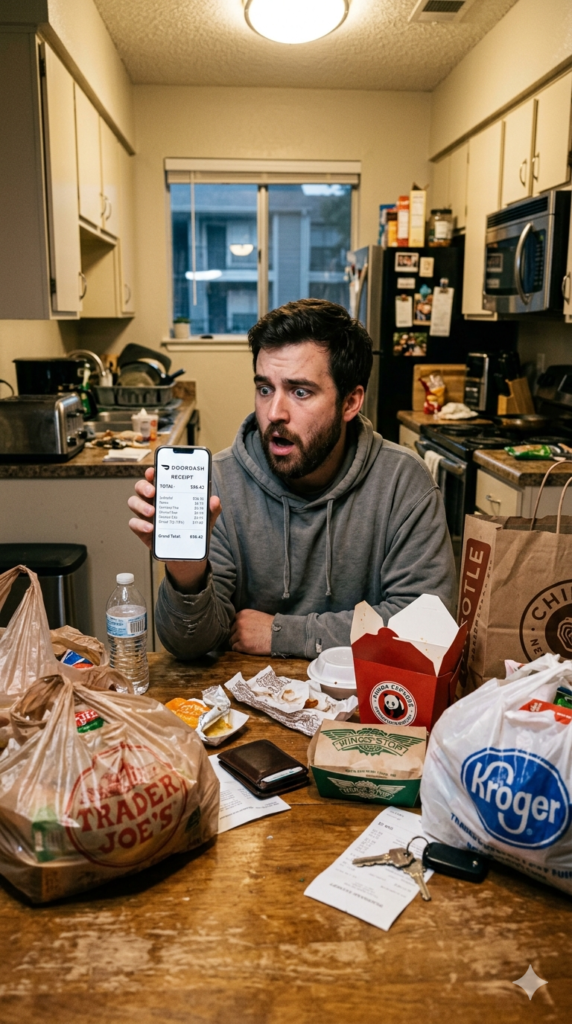
The Hidden Tax of Convenience: An Audit of Delivery App Markups vs. In-Store Prices
Convenience has become one of the most valuable products in America.
In 2026, millions of consumers use delivery apps almost daily.
Groceries arrive without entering a store.
Restaurant meals appear at the front door.
Coffee, snacks, medicine, and household essentials can be ordered within minutes.
The process feels simple.
Fast.
Effortless.
But behind that convenience lies a hidden cost many consumers rarely calculate.
A cost that often exceeds expectations.
The Convenience Experiment
To understand the true price of delivery apps, I decided to conduct a simple experiment.
Over several weeks, I compared prices between major delivery platforms and local store purchases.
The goal was straightforward:
Buy identical items.
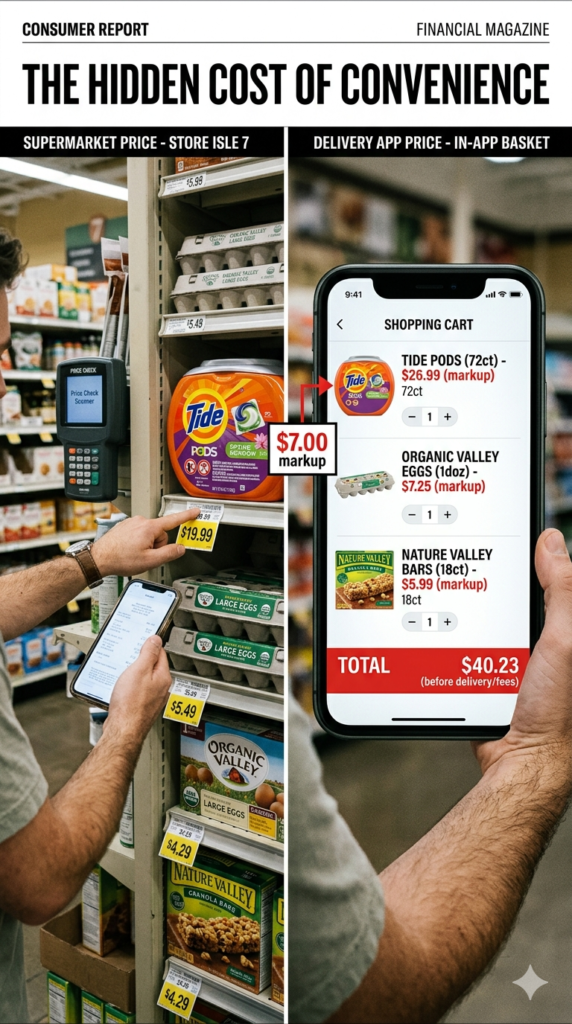
Compare total costs.
Track every fee.
What began as casual curiosity quickly became eye-opening.
At first glance, many products appeared only slightly more expensive on delivery platforms.
Sometimes only a few cents.
Sometimes a dollar.
But once the full order reached checkout, the story changed dramatically.
The First Layer: Menu Markups
One of the biggest surprises was the item pricing itself.
Many consumers assume delivery apps simply charge store prices plus delivery fees.
That is often not the case.
Restaurants and retailers frequently list products at higher prices within delivery platforms.
A sandwich that costs $12 inside a restaurant may appear for $14 or $15 online.
A grocery item priced at $4.99 in-store may appear as $5.99 or higher on the app.
Individually, these increases seem small.
Collectively, they add up quickly.
The Second Layer: Service Fees
Then came the service fees.
Many delivery platforms add additional charges that are not immediately visible when browsing products.
These fees vary by location, platform, and order size.
While each fee may appear modest on its own, together they significantly increase the total bill.
Consumers often focus on delivery charges while overlooking service costs that quietly raise the final price.
The Third Layer: Delivery Charges
Next comes the most obvious expense.
Delivery itself.
Depending on distance, demand, weather conditions, and time of day, delivery fees can vary dramatically.
A short trip may cost only a few dollars.
During peak periods, that same delivery can become substantially more expensive.
Many customers accept this cost because it represents the visible price of convenience.
Yet it is only one part of the equation.
The Fourth Layer: Tips
Then comes tipping.
Most customers understandably want to compensate drivers fairly.
In many cases, tips represent an important portion of a driver’s earnings.
However, when added on top of inflated menu prices, service fees, and delivery charges, the final cost can become surprisingly high.
A meal that originally costs $25 may ultimately exceed $40 before reaching the customer.
The Grocery Reality Check
The most revealing results appeared during grocery comparisons.
One weekend, I built a basic shopping list:
Milk.
Eggs.
Bread.
Chicken.
Fruit.
Vegetables.
Pasta.
Several household essentials.
The in-store total came to approximately $78.
The same basket through a delivery app exceeded $110 after markups, fees, and tipping.
The convenience cost more than thirty dollars for a single order.
Repeated throughout a month, those differences become significant.
How Small Purchases Become Expensive Habits
The biggest financial danger is not one large order.
It is repeated small orders.
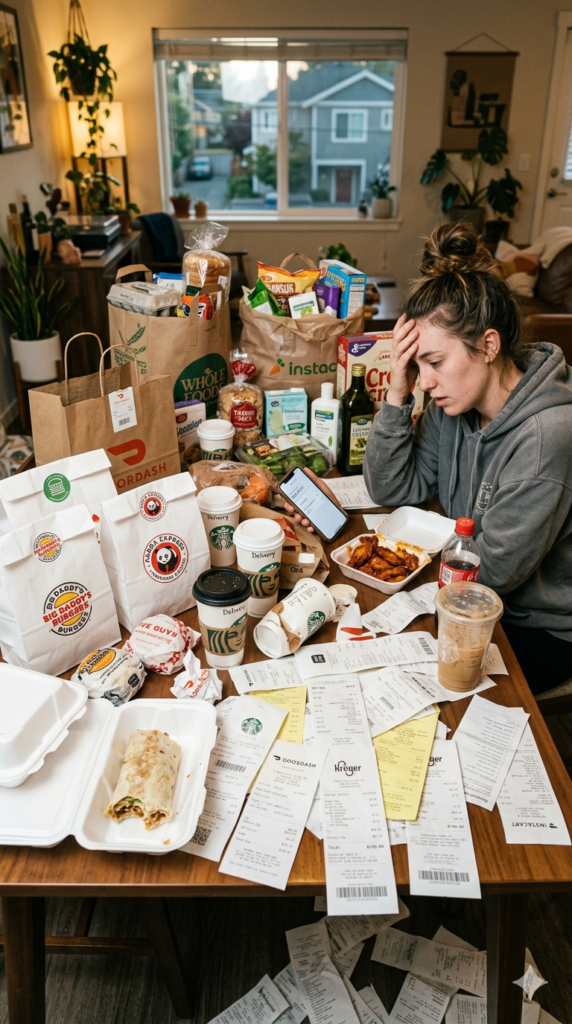
A coffee delivery here.
A fast-food order there.
A late-night snack purchase.
Individually, the extra cost feels manageable.
But over a year, many households spend hundreds or even thousands of dollars on convenience premiums they barely notice.
The Psychology Behind Convenience
The reason delivery apps succeed is simple.
They remove friction.
People no longer need to drive.
Wait in line.
Search for parking.
Walk through crowded stores.
Time has value.
Convenience has value.
For busy professionals, parents, elderly individuals, or people with mobility limitations, delivery services can be genuinely worthwhile.
The problem is not the service itself.
The problem is misunderstanding its true cost.
What Consumers Should Understand in 2026
The hidden tax of convenience is real.
Consumers are often paying multiple layers of additional cost simultaneously:
Higher product prices.
Service fees.
Delivery charges.
Tips.
Occasional surge pricing.
None of these costs are necessarily unreasonable on their own.
But together they create a premium that many households underestimate.
The Verdict
Delivery apps remain one of the most useful consumer innovations of the past decade.
They save time.
Increase accessibility.
Provide flexibility.
But convenience is never free.
The next time a delivery order seems only slightly more expensive than shopping in person, look carefully at the final receipt.
The difference may be much larger than it first appears.
In 2026, the smartest consumers are not necessarily avoiding delivery apps.
They are simply using them intentionally.
Because convenience can be a valuable tool.
But when used without awareness, it quietly becomes one of the most expensive habits in a household budget.