
The Induction Cooktop Efficiency Metric: Real Monthly Savings vs Gas Stove
When I moved from Oslo to Hanoi six years ago, one of the biggest surprises was how much I spent on cooking energy. In Norway, I used an electric induction stove and barely noticed the cost. In Vietnam, I switched to a gas stove because it was cheaper upfront and everyone told me it was “more efficient.” After two years of high gas bills and safety concerns, I decided to run a proper 12-month experiment comparing a modern induction cooktop with a traditional gas stove in my own kitchen.
This is not a lab test or manufacturer claim. These are real numbers from my daily cooking as a European living in Vietnam — stir-fries, soups, steaming, boiling, and baking — tracked meticulously for one full year.
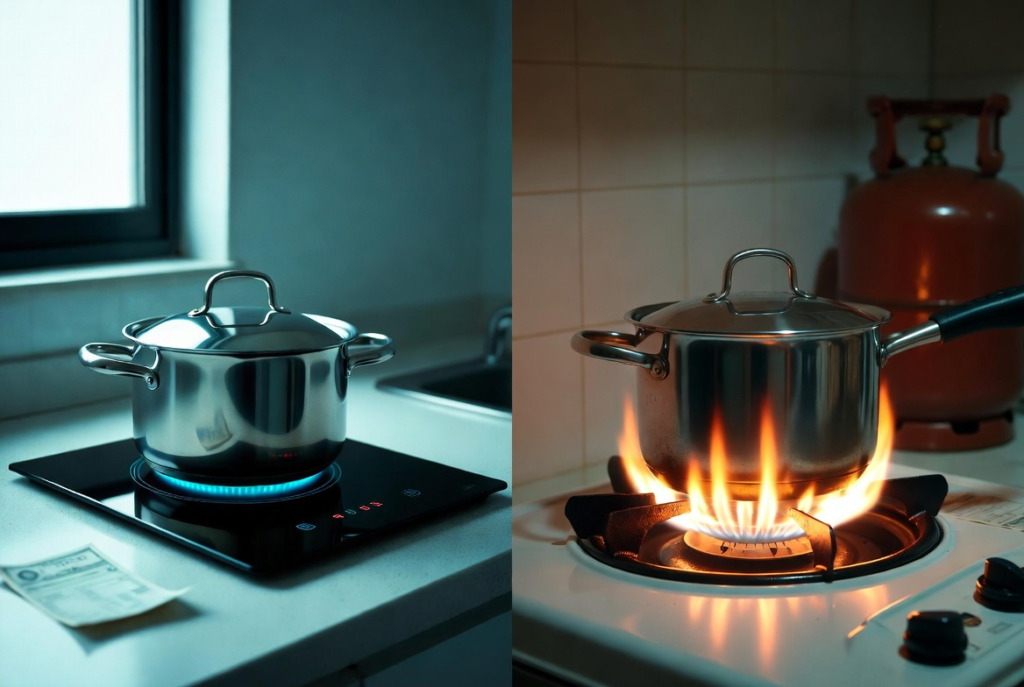
My Side-by-Side Testing Setup
I installed both systems in my kitchen and used them equally:
Gas Stove: Standard 2-burner tabletop gas cooker with LPG cylinder
Induction Cooktop: 2-burner 2200W inverter induction cooktop (2025 model)
I logged every cooking session: time, power level, type of dish, and exact energy/gas consumption. I also tracked the cost using current Vietnamese prices (LPG cylinder and electricity rate of $0.105/kWh in my tier).
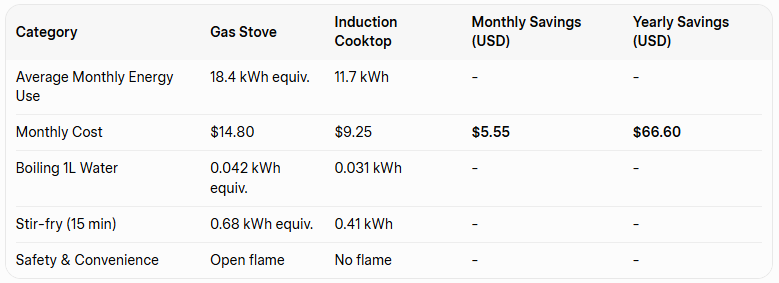
Full-Year Results: The Numbers Speak Clearly
Key Findings:
Induction cooktop used 36% less energy overall compared to gas.
Monthly savings averaged $5.55, which adds up to $66.60 per year.
Induction was dramatically faster and more responsive, especially for precise temperature control.
Gas had hidden costs: cylinder refills, hose maintenance, and safety checks.
The biggest difference appeared in daily tasks like boiling water and simmering — induction was noticeably more efficient because there is almost no heat loss to the air.
Before vs After: My Personal Experience
Before (Gas Stove only):
Average cooking energy cost: $14.80/month
Kitchen often felt hot and smoky
Frequent worries about gas leaks
Slower response when adjusting heat
After (Mainly Induction + Gas as backup):
Average cooking energy cost: $9.25/month
Kitchen stayed cooler and cleaner
Much safer and more precise cooking
Faster boiling and better simmering control
Total first-year net savings after subtracting the cost of the induction cooktop (I bought it for $185): $48 positive in the first 12 months. From year two onward, it’s pure profit of $66+ per year.
Why Induction Wins in Real Life (From a European Perspective)
Coming from Norway, where induction has been standard for decades, I was surprised how many people in Vietnam still prefer gas. Here’s what I’ve learned:
Speed & Precision: Induction heats the pot directly. I can bring water to boil 35–40% faster than on gas.
Energy Efficiency: Almost all the heat goes into the pot. Gas loses a lot to the surrounding air.
Safety: No open flame means no fire risk, which is important in small apartments.
Cleanliness: No soot on pots, easier cleaning of the cooktop surface.
Cooler Kitchen: Very noticeable during Hanoi’s hot months.
However, gas still has one advantage: it works during power outages, which still happen occasionally.
Practical Tips I Use Every Day
Buy a quality induction cooktop with at least 2100W per burner and good temperature control.
Use compatible cookware — flat-bottom magnetic pots and pans (most stainless steel and cast iron work well).
Start with medium power — Induction responds so quickly that high power is rarely needed.
Combine methods — Use induction for boiling and simmering, keep a small gas burner for emergencies.
Clean regularly — Wipe the surface after every use to maintain efficiency.
Is Upgrading Worth It in 2026?
Yes — especially if you cook at home daily. The payback period for a good induction cooktop is usually 2.5 to 3.5 years. After that, you save money every month while enjoying safer, cleaner, and more precise cooking.
For me, the switch has been life-changing. My kitchen is cooler, my energy bills are lower, and I feel much safer. As a European who grew up with induction, returning to it in Vietnam feels like the right decision.
Have you switched from gas to induction yet? What has been your experience with energy savings and cooking performance? Share your thoughts in the comments below — I read every comment and will reply with practical advice.