
For years, my workdays followed the same familiar pattern.

Wake up.
Open the laptop.
Answer emails.
Jump between meetings.
Scroll social media for “just a minute.”
Then somehow realize it was already evening while wondering where the day had gone.
I wasn’t lazy.
I simply stayed busy without ever reaching deep focus.
After reading neuroscience research about Ultradian Rhythms—the natural 90-minute cycles our brains use for peak concentration—I decided to test whether organizing my schedule around those biological patterns would actually improve productivity.
Instead of trying to work nonstop for eight or nine hours, I committed to working in focused 90-minute blocks followed by deliberate recovery periods.
The experiment lasted thirty days.
Every work session was logged.
Every interruption was recorded.
My smartwatch tracked stress levels and heart rate.
The results surprised me.
Week One: Breaking Old Habits
The first few days felt uncomfortable.
Normally I switched tasks every few minutes.
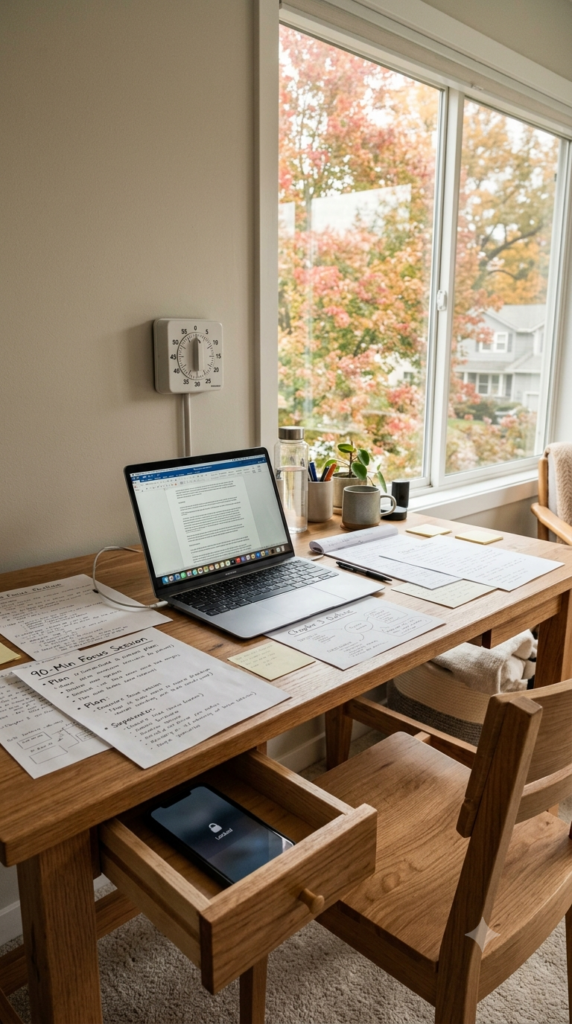
Now I turned off notifications.
Closed every unnecessary browser tab.
Placed my phone in another room.
During each ninety-minute session I worked on only one project.
No email.
No messaging apps.
No multitasking.
The first sessions felt incredibly long.
Around the forty-minute mark my brain automatically searched for distractions.
I wanted to check headlines.
Open YouTube.
Reply to texts.
Instead, I stayed with the task.
When ninety minutes ended, I forced myself to step away.
Ten to fifteen minutes outside.
Stretching.
Walking.
Drinking water.
No screens.
Then another ninety-minute session began.
Week Two: Measuring Real Output
Instead of tracking hours worked, I measured completed work.
Articles finished.
Reports submitted.
Creative ideas generated.
Project milestones completed.
Something unexpected happened.
Although total working time dropped from roughly nine hours to about six hours each day, completed work increased significantly.
Tasks that previously stretched across an entire afternoon were now finished inside one focused session.
The biggest difference wasn’t speed.
It was fewer mistakes.
Without constant interruptions, I spent less time correcting errors later.
Physical Changes I Didn’t Expect
My smartwatch recorded lower average daytime heart rate during work hours.
Stress notifications became less frequent.
By avoiding endless task switching, mental fatigue accumulated much more slowly.
I also noticed fewer afternoon headaches.
Instead of feeling completely exhausted by dinner, I still had enough energy for exercise and family time.
Ironically, working fewer hours made the rest of my day feel much longer.
Creativity Improved More Than Productivity
The biggest surprise wasn’t efficiency.
It was creativity.
During uninterrupted ninety-minute sessions, ideas appeared naturally.
Complex problems became easier to solve.
Writing flowed without constantly restarting my train of thought.
Many of my best project ideas came during the final twenty minutes of each focus block—the exact time I previously would have been checking email or social media.
The Recovery Periods Were Just As Important
At first I assumed the breaks were wasted time.
They weren’t.

Walking around the block.
Making tea.
Looking outside.
Even sitting quietly without touching my phone.
Those small recovery periods reset my attention far better than scrolling through social media ever had.
When the next session began, my brain felt refreshed instead of overloaded.
What Didn’t Work
Not every day went perfectly.
Unexpected meetings occasionally interrupted the schedule.
Some projects required collaboration that couldn’t always fit neatly inside ninety minutes.
On those days I adjusted rather than abandoning the system entirely.
The goal wasn’t perfection.
It was consistency.
Even completing two focused sessions made the day noticeably more productive than my previous multitasking routine.
The Numbers After Thirty Days
Comparing project management records with the previous month showed clear improvements.
Average daily focused work increased despite fewer total hours.
Task completion rates improved.
Editing time decreased.
Creative output increased.
Most importantly, I finished work earlier almost every day.
Instead of ending the afternoon mentally exhausted, I ended feeling accomplished.
That difference affected everything outside work.
Sleep improved.
Evening stress decreased.
Weekends felt like actual rest rather than recovery from burnout.
Would I Continue?
Absolutely.
The experiment completely changed how I think about productivity.
Working longer had never been my real problem.
Working without protecting attention was.
The brain isn’t designed for endless concentration.
It naturally moves through cycles of intense focus followed by recovery.
Once I started working with those rhythms instead of fighting them, everything became easier.
Today I still organize nearly every important project around ninety-minute focus sessions.
Not because it’s trendy.
Because after thirty days of tracking real data, it consistently produced better work in less time.
Sometimes the smartest way to accomplish more isn’t adding another hour to the day.
It’s giving your brain permission to work the way it was designed.