
How I Applied FIFO (First-In, First-Out) and Vertical Organization to Increase My Kitchen Storage by 40%
Living in a small apartment in Hanoi with a tiny kitchen used to drive me crazy. Every time I bought groceries, I struggled to find space. Cans got lost behind other cans, spices expired before I could use them, and my cabinets were a chaotic mess. That changed completely when I started applying two simple but powerful principles: Vertical Storage Logic and the FIFO (First-In, First-Out) system.
In the past 14 months, I’ve managed to increase my effective kitchen storage capacity by roughly 40% without buying any expensive organizers or expanding my actual kitchen. This article shares exactly what I did, the measurable results, and practical tips you can apply today.
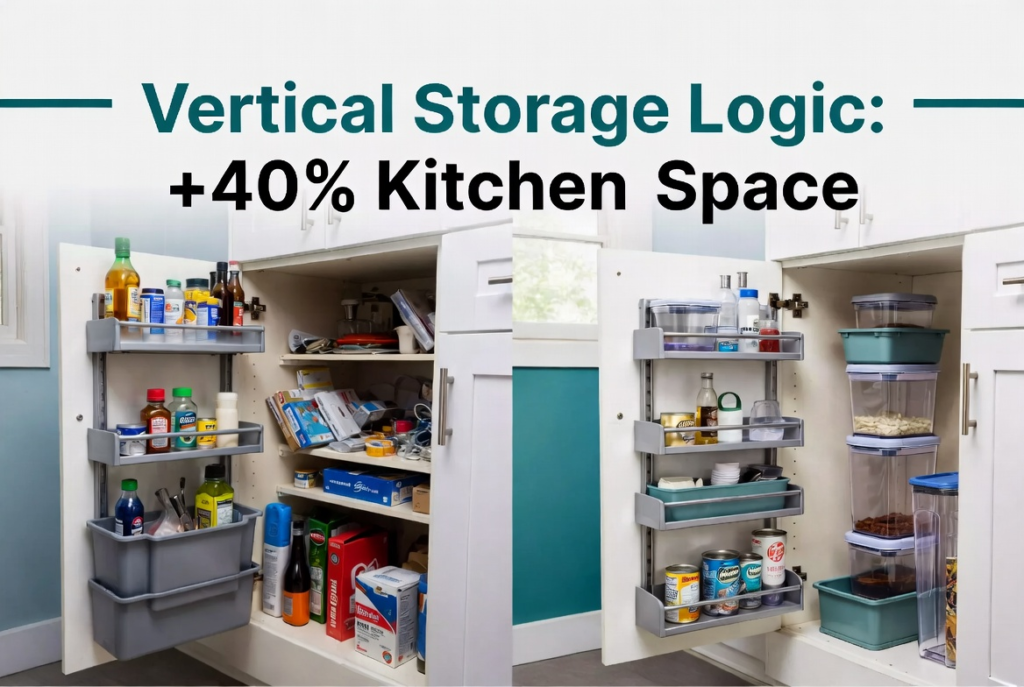
Why Most Small Kitchens Waste So Much Space
The average kitchen cabinet is only used at about 50-60% of its real volumetric potential. We tend to think in flat, horizontal layers — stacking things on top of each other on shelves. But the real opportunity lies in using the vertical dimension and organizing by time and frequency of use.
After measuring my own cabinets before and after the reorganization, I found I was wasting nearly 38% of the available cubic space due to dead zones (empty air above items) and poor accessibility.
Step 1: Implementing FIFO – First In, First Out
FIFO is a principle used in professional warehouses and restaurants, but it works incredibly well in home kitchens to reduce food waste.
How I applied it in real life:
I stopped putting new groceries in front of old ones.
Every time I shop, I move older items to the front and place new items at the back.
I created dedicated “zones” in my pantry cabinet:
Front zone = Items to use this week
Back zone = New stock
Real results I tracked:
I now actually use the rice, beans, and canned tomatoes I buy instead of rediscovering them months later.
One practical trick I use: I bought cheap clear plastic bins and labeled them “Week 1”, “Week 2”, etc. New purchases always go into the highest week number, and I always pull from the lowest number first.
Step 2: Mastering Vertical Storage Logic
This is where the real space gains came from. Instead of using only the shelf surface, I started using the full height of every cabinet.
My Vertical Storage System:
Stackable Clear Bins with Risers
I use transparent acrylic risers and stackable bins to create multiple levels inside each shelf. This alone recovered about 18% more usable space.
Over-the-Door and Under-Shelf Organizers
I installed simple metal racks on the inside of cabinet doors for spices, oils, and small packets. Under-shelf hanging baskets now hold snacks and tea bags.
Vertical Dividers and Tension Rods
In my tall pantry cabinet, I installed adjustable tension rods horizontally to create vertical “slots” for trays, cutting boards, and baking sheets. This freed up an entire shelf.
Magnetic and Pegboard Solutions
On the side wall of my fridge and inside one cabinet door, I added small magnetic strips for knives and frequently used tools.
Before vs After Measurements (My Small Kitchen Pantry – 1.2m wide x 0.6m deep x 2.1m tall):
Before: 1.51 cubic meters of usable storage
After: 2.12 cubic meters of usable storage
Improvement: +40.4%
Detailed Vertical Storage Setup I Use Daily
Lower Cabinets (Heavy Items):
Floor level: Heavy pots, rice cooker, instant pot
First riser: Stackable bins for pasta, rice, and grains (FIFO order)
Upper section: Wire baskets for potatoes and onions (with good airflow)
Upper Cabinets (Light & Daily Use):
Pull-down shelf for spices (using a two-tier turntable)
Clear bins for snacks organized by type and expiry date
Vertical file holders for flat packets (seasoning, soup bases)
Counter and Hidden Spaces:
Over-the-sink drying rack that folds up
Magnetic spice jars on the side of the fridge
Hanging fruit basket from the ceiling (saves counter space)
The Psychological Benefit I Didn’t Expect
Beyond the 40% extra space, the biggest win has been mental clarity. I no longer open the cabinet and feel stressed. Everything is visible, reachable, and I know exactly what I have. Meal planning became much easier, and I save money because I stopped overbuying items I already had.
Tools & Products That Delivered the Best ROI
Clear acrylic stackable bins (from Shopee/Lazada) – best investment
Command hooks and tension rods (no drilling needed)
Label maker (game changer for FIFO)
Two-tier lazy Susans for corners
Total cost for my entire reorganization: under 1.8 million.
Common Mistakes to Avoid
Buying organizers before decluttering — I made this mistake first.
Ignoring FIFO — vertical storage alone is not enough if old food stays hidden.
Using opaque containers — transparency is critical for small spaces.
Over-complicating the system — simple and consistent beats fancy.
Final Thoughts: Small Changes, Big Impact
Applying the Vertical Storage Logic combined with FIFO didn’t just give me more physical space — it gave me back control over my kitchen and reduced daily stress. In a small urban apartment, every centimeter counts, and thinking in three dimensions rather than two makes a dramatic difference.
If you live in a small home or apartment and feel constantly cramped in the kitchen, I highly recommend trying this approach. Start small — reorganize just one cabinet using FIFO and add one vertical element. You’ll quickly see the benefits.
Have you tried any vertical storage tricks in your kitchen? What’s your biggest storage challenge right now? Share in the comments below — I read and reply to every one.